
REVIEW · PAMUKKALE & HIERAPOLIS TOURS
From Izmir: Pamukkale Full-Day Tour
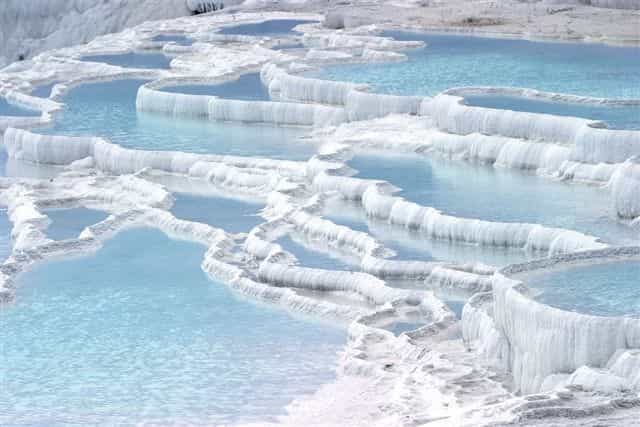
Pamukkale looks unreal, even from a distance. This full-day tour from Izmir pairs the white travertines of Pamukkale with the ancient ruins of Hierapolis, so you get nature that looks painted, then history that feels like you walked into Roman times.
I love that the day is built around two headline sites, not just a quick photo stop. The tradeoff is real though: the drive is long, and your time in Pamukkale can feel brief once you factor in pickup, breaks, lunch, and the return trip.
In This Review
- Key Highlights
- Pamukkale and Hierapolis in One Long Day From Izmir
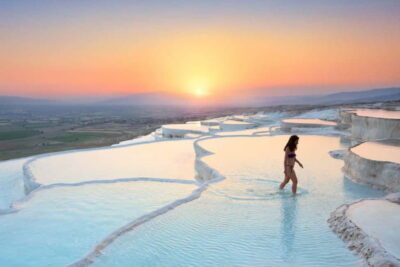
- The Cotton Castle Moment: Walking the White Travertines
- Healing Water Claims, Swimsuit Advice, and What to Expect
- Lunch Time and the Onyx Stop (Plan for the Pace)
- Hierapolis After Lunch: The Holy City and Why It Fits
- Hierapolis’ Big Targets: Apollo, Nymphs, and the Necropolis
- The 12,000-Seat Amphitheater: Where the Crowds Would Have Been
- How the Izmir Drive Affects Your Day (And How to Cope)
- Guide Quality in Real Life: English Stories That Click
- Skip the Ticket Lines, Not the Value
- Price and Logistics: Is $210 Worth It?
- Who Should Book This Tour, and Who Might Pass
- Should You Book? My Practical Recommendation
- FAQ
- What is the duration of the From Izmir: Pamukkale Full-Day Tour?
- How long does it take to get from Izmir to Pamukkale?
- Is lunch included?
- What should I bring for Pamukkale?
- What’s included in the price?
- Is there free cancellation?
Key Highlights
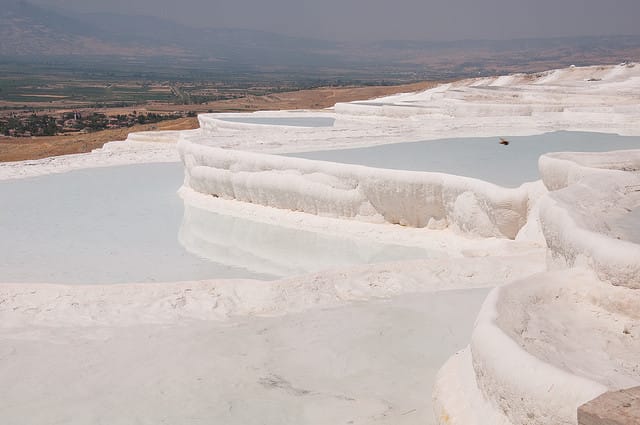
- Pamukkale’s UNESCO travertines: walk on the famous white terraces known as the cotton castle.
- Roman spa city next: Hierapolis connects directly to the water story through Roman-era history.
- A proper amphitheater visit: see the well preserved 12,000-seat theater.
- More than one ruin stop: Necropolis, Temple of Apollo, and the shrine of the nymphs.
- Healing-water talk (and swim options): learn the claims, and plan for swimsuit time if you want it.
Pamukkale and Hierapolis in One Long Day From Izmir
This is the kind of outing that gives you two major sights without changing hotels. You start in Izmir in the morning, then you’re on the road early enough that the day feels like a mini road trip even before you reach Pamukkale. The payoff is that you’re not guessing how to connect sites yourself, because the day is packaged around a smooth flow: Pamukkale first, then Hierapolis after lunch, then back to Izmir.
Pamukkale, meaning cotton castle in Turkish, is the star for a reason. The white petrified lime cascades and famous travertines are the whole point, and they’re recognized as a UNESCO World Heritage Site. The goal isn’t just to look, it’s to walk through the travertines and enjoy the views from the terraces.
Then the tour pivots to the Roman connection. Long ago, the Romans noticed the reputation of the water and built a large spa city nearby called Hierapolis. By the time you get there, you’re not just touring ruins, you’re looking at the setting where ancient travelers believed in healing waters.
More Pamukkale & Hierapolis Tours in Izmir
- Pamukkale Tour from Izmir
★ 5.0 · 806 reviews - From Izmir: Guided Pamukkale Full-Day Tour with Lunch
★ 4.5 · 190 reviews - From Izmir: Pamukkale Guided Tour with Lunch
★ 4.8 · 143 reviews
The Cotton Castle Moment: Walking the White Travertines
The best way to enjoy Pamukkale is to think less about rushing and more about moving slowly on your feet. You arrive about two and a half hours after leaving Izmir, and the time you spend there is built around an actual walk through the white travertines.
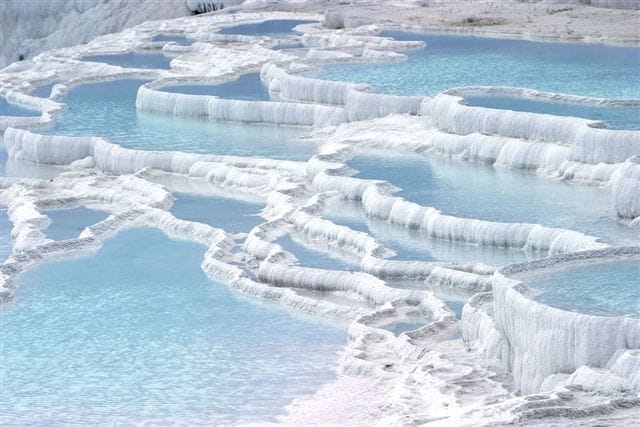
One reason people fall for Pamukkale is how visually dramatic it is. The terraces look like layered chalk, and even when you’ve seen pictures, it still feels oddly unreal in person. If you like landscapes that look almost too clean and bright, you’ll get that hit right away.
Here’s the practical part: you’ll want to treat the travertines like a special walking area, not a sightseeing sidewalk. Wear comfortable shoes you can trust for uneven ground and lots of steps. Also, plan for changing conditions. If you’re sensitive to heat, bring water and use shaded moments whenever you can.
Healing Water Claims, Swimsuit Advice, and What to Expect

Pamukkale water has a reputation for benefits, especially for eyes and skin. It’s also said to help with illnesses like asthma and rheumatism. Whether you take those claims literally or just treat them as part of the legend, the tour frames the site around the idea that this water mattered to people long before modern tourism existed.
The tour also notes something important for comfort and planning: swimming is possible in certain areas, so you should bring your swimsuit if you want that option. Even if you skip swimming, having the swimsuit gives you flexibility, and it saves you from that annoyed moment where you realize you came prepared for pictures but not for the experience.
This is also where I think a good mindset helps. Pamukkale isn’t just a view, it’s a place people come because they believe in the water. So when you walk the terraces, don’t just look for the “most photogenic spot.” Notice how the terraces and pools are arranged, because that’s where the idea of the healing waters comes into view.
Lunch Time and the Onyx Stop (Plan for the Pace)
After you’ve spent time in Pamukkale, you head to lunch. Lunch is provided, which is a big deal on a day like this because it prevents you from having to hunt for food after travel time and walking.
One extra detail you should be aware of: the tour may include a stop at an onyx shop. That kind of stop can be hit or miss depending on what you enjoy. If you like shopping, it can be a straightforward cultural detour. If you’d rather spend every minute outside, treat it like a short break in the schedule and focus on keeping your energy up for Hierapolis right after.
If you’re the type who needs a steady flow of snacks, don’t rely only on the provided meal. One early breakfast stop can be basic, so if you have strong opinions about breakfast, pack a small backup snack so you’re not stuck hungry before Pamukkale.
More Pamukkale and Hierapolis trips:
- Full Day Pamukkale and Hierapolis Tour from Izmir
★ 5.0 · 113 reviews - From Izmir: Pamukkale, Hierapolis and Karahayit Day Tour
★ 3.8 · 12 reviews - From Izmir: Pamukkale Day Trip with Lunch
★ 4.2 · 11 reviews - From Antalya/Kemer: Pamukkale & Hierapolis Day Trip w/Meals
★ 4.5 · 2,196 reviews
Hierapolis After Lunch: The Holy City and Why It Fits
Hierapolis means Holy City in Turkish, and the tour presents it as a place shaped by Roman decisions and long-standing spiritual associations. You’ll visit the ancient city after lunch, which works well because it keeps you from trying to do both sites at full intensity on empty stomachs.
The story goes like this: Romans, aware of the powers of Pamukkale’s water, built a large spa city in the area. Even though Hierapolis hasn’t been lived in for several centuries, it remains fascinating because the ruins still communicate how people lived, gathered, and healed.
What I like about starting Hierapolis after Pamukkale is the contrast. Pamukkale is visual and sensory, bright and white, almost otherworldly. Hierapolis is structured and human-scale: theaters, temples, shrines, and burial grounds. By the time you get there, you’re ready for the archaeology to make sense in a different way.
Hierapolis’ Big Targets: Apollo, Nymphs, and the Necropolis
Hierapolis gives you a set of anchor stops, and that’s what makes the visit feel complete rather than scattered. You’ll see the Temple of Apollo and the shrine of the nymphs, plus major parts of the city complex tied to civic and spiritual life.
Then there’s the Necropolis. The tour highlights it as the largest ancient graveyard in Anatolia, and if you’re into the scale of historical places, it’s the kind of site that makes time feel oddly distant. Even if you’re not a hardcore ruins person, the idea of a vast burial landscape is hard to ignore, because it changes how you see the rest of the city. It’s not just where Romans visited and cheered, it’s where they marked the end of life.
Give yourself a little mental space here. It’s easy to speed through ruins when you’re tired from the bus. But Hierapolis rewards slower looking. If you can, pause at viewpoints and let the buildings and structures sink in, because the tour only gives you one shot at the big picture.
The 12,000-Seat Amphitheater: Where the Crowds Would Have Been
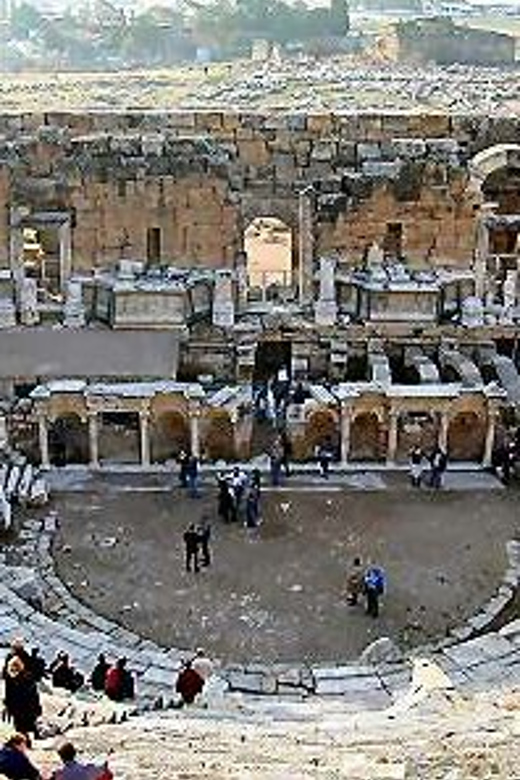
The amphitheater is one of the most dramatic features in the day’s lineup. Hierapolis has a well preserved 12,000-seat amphitheater, and this stop is built to give you a real sense of gathering and performance in Roman life.
What I like about this stop is how it connects back to the spa-city idea. A place famous for healing would still need social structure. Amphitheaters were not just for entertainment, they were for public identity. Sitting and looking at where crowds would have filled the stands makes the ruins feel more alive than stone alone.
Also, it’s a practical timing advantage. Even if you’re tired, amphitheaters are easy to understand with minimal explanation. You can look, take in the shape, then turn toward the next ruin without getting lost in complex technical details.
How the Izmir Drive Affects Your Day (And How to Cope)
This tour is full-day in the strict sense. It runs about 15 hours, and you should expect a long stretch of travel each way. Pamukkale is not close enough for a casual day trip from Izmir, so the schedule has to do heavy lifting on the logistics.
One key point you should plan for: your ride may involve additional pickup along the way. The day can start with pickup around early morning, and the route can continue through areas such as Selcuk to collect another group. From there, the drive can continue toward Denizli, and in some cases you might switch to another bus once you arrive in the city. That bus can be full, so you’ll want to be ready for close seating.
This is the main drawback to weigh. If you hate long bus days, you might feel like the day is more transportation than sightseeing. But if you can accept the travel time and you like having a guided structure, the day can feel worthwhile because you get a lot of ground covered without doing any route planning.
To cope, I suggest you treat it like a long-haul train day in Turkey. Bring water, plan to use rest stops when offered, and keep your phone charged, because you’ll want photos at both Pamukkale and Hierapolis. Also, pack light layers. Morning temperatures around departure time can feel different from later afternoon.
Guide Quality in Real Life: English Stories That Click
A tour like this lives or dies on explanation. Ruins can be beautiful, but the difference between confusing stone and meaningful stone is often the guide.
The tour includes an English speaking guide, and the way the history is presented matters. One praised guide name you may hear in this kind of operation is Merve, noted for sharing deep historical information. Even if you don’t get that exact guide, the key takeaway is that the tour is designed around interpretation, not just location drops.
When it works, the guide helps you connect Pamukkale and Hierapolis. You learn why the Romans were drawn to the water, and then you look at the amphitheater and temples with a clearer sense of how a spa city functioned. That turns the day from a checklist into a story you can follow.
Skip the Ticket Lines, Not the Value
This tour says you’ll skip the ticket line, which matters on busy days. When you’re on a tight time schedule and you have long travel blocks, even a short delay can steal time from your walking and viewing.
Then there’s the structure of what’s included. You get hotel pickup and drop-off, an air-conditioned vehicle, entrance fees, and a guide in English, plus VAT. That means you’re paying for the convenience and the access, not just for someone to point at ruins.
If you’re the kind of traveler who hates budgeting a day-trip on the fly, this package format is the point. You know what you’re getting, and you’re not stuck hunting down tickets, entry hours, or how to move between the sites.
Price and Logistics: Is $210 Worth It?
At $210 per person, the value question comes down to tradeoffs: how much you get for that price versus how much time you spend commuting.
On the value side, the included list is meaningful for a full day. Hotel pickup and drop-off saves hassle. Entrance fees are handled. A live English guide means you’re not just paying to see two places, you’re paying to understand them while you’re there. And you’re traveling by air-conditioned vehicle with a scheduled flow.
On the logistics side, it’s a long day. You’re devoting a big chunk of the day to transit, and the time at Pamukkale can feel limited if you were hoping for a slow, lingering session. One other real-world factor is the early morning schedule. If you need sleep, the start time can be tough.
My practical verdict: this is good value if you want one guided, no-planning day that hits both Pamukkale and Hierapolis. It’s less good value if you personally want lots of flexible time on your own, because you’re boxed into a set pace.
Who Should Book This Tour, and Who Might Pass
You’ll likely enjoy this tour if you:
- Want a full-day guided trip from Izmir without switching hotels.
- Like both nature and ruins, and you’re comfortable with a packed schedule.
- Prefer having someone handle entry fees and route timing for you.
- Are curious about Pamukkale’s water reputation and want to see the travertines up close.
You might want to think twice if you:
- Hate long bus days and want more quiet time.
- Want a lot of unhurried time at Pamukkale, since the total visit is limited by the 15-hour schedule.
- Are very sensitive to early morning starts and long drives.
Should You Book? My Practical Recommendation
I’d book this tour if your goal is simple: see Pamukkale’s white travertines and then move on to Hierapolis’ major ruins in one organized day, all from Izmir. The included guide, entrances, and hotel pickup make it a low-stress way to hit two UNESCO-level stops.
Just go in with your expectations set. This is not a slow nature retreat. It’s a long, structured day, and your enjoyment will depend on whether you can treat the drive as the price of doing both sites in one trip.
If you’re happy with that trade, you’ll come away with a day that feels like two different Turkey stories, both in one go.
FAQ
What is the duration of the From Izmir: Pamukkale Full-Day Tour?
The tour lasts about 15 hours.
How long does it take to get from Izmir to Pamukkale?
The drive is about 2.5 hours to reach Pamukkale.
Is lunch included?
Yes. Lunch is provided after you visit Pamukkale and before you go to Hierapolis.
What should I bring for Pamukkale?
If you want the option to swim in certain areas, bring a swimsuit. Comfortable walking shoes also help for the travertines.
What’s included in the price?
The tour includes hotel pickup and drop-off, entrance fees as per the itinerary, an English speaking guide, an air-conditioned vehicle, and VAT.
Is there free cancellation?
Yes. You can cancel up to 24 hours in advance for a full refund.
Newest Izmir reviews on the site
- Kusadasi: Ephesus & Mary’s House Tour with Ticket★ 4.9 · 44 reviews
- Ephesus and Sirince Tour from Izmir / Kusadasi★ 4.6 · 22 reviews
- Ephesus, Virgin Mary’s House & Sirince Village from Izmir★ 4.9 · 19 reviews
- Izmir City Tour★ 4.7 · 9 reviews
- Full-Day Tour of Ancient Ruins in Ephesus from Izmir★ 4.5 · 43 reviews
- From Izmir: Seven Churches of Revelation Multi-Day Tour★ 4.4 · 9 reviews
- From Izmir: Pamukkale Day Trip with Lunch★ 4.2 · 11 reviews
- From Izmir: Pamukkale, Hierapolis and Karahayit Day Tour★ 3.8 · 12 reviews
Pamukkale & Hierapolis Tours, compared.
From Antalya/Kemer: Pamukkale & Hierapolis Day Trip w/Meals
Read our review →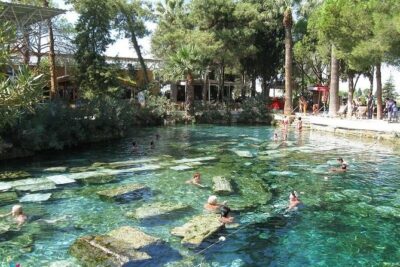
Pamukkale Hierapolis and Cleopatra’s Pool Tour with lunch from Antalya
Read our review →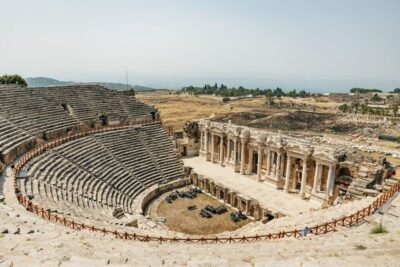
From Antalya/Kemer: Pamukkale and Hierapolis Tour with Lunch
Read our review →
Antalya Pamukkale Hot Springs & Hierapolis Tour With Lunch
Read our review →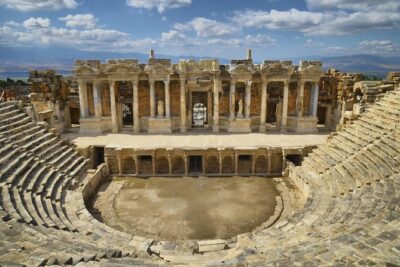

Full-Day Tour of Pamukkale from Antalya with Lunch
Read our review →

Full-Day Tour to Pamukkale From Marmaris w/ Breakfast & Lunch
Read our review →Browse the lists this tour appears in