
REVIEW · PAMUKKALE & HIERAPOLIS TOURS
From Izmir: Pamukkale Day Trip with Lunch
White cliffs, hot water, and Roman ruins.
On a Pamukkale day trip from Izmir, I love how Pamukkale’s travertines turn a chemistry lesson into a walkable natural wonder. You also get a guided sweep through Hierapolis, so you see more than pretty stones. One thing to consider up front, the water level and some pool areas can vary day to day, including occasional closures for work.
What really sells this tour is the pace and the human touch. In particular, guides like Mr. Alpin are praised for clear English and making history easy to follow, not forced or rushed. The one drawback that can change your mood is that the long drive makes this a full day, so it helps to be ready for a big chunk of time on the road.
In This Review
- Key points
- Pamukkale Travertines: Why the white looks like it does
- Hierapolis in one guided sweep: gates, temples, baths, and the underworld
- Cleopatra Pool time: worth it, but plan for variables
- Lunch break: included buffet style, simple and filling
- Price and logistics: is $150 good value for this kind of day?
- Practical tips so the day feels smooth
- Should you book the Pamukkale Day Trip from Izmir?
Key points
- Small group limit of 14 keeps the walk and questions comfortable, even with a busy site.
- Pamukkale travertines are explained with real water chemistry, so the views make more sense.
- Hierapolis highlights include Domitian Gate, Frontinus Street, Apollon Temple, and Plutonium ruins.
- Lunch is included, and it’s often a buffet with desserts at a renovated restaurant.
- Cleopatra pool time may be short (about 50 minutes reported), and access can depend on conditions.
Pamukkale Travertines: Why the white looks like it does
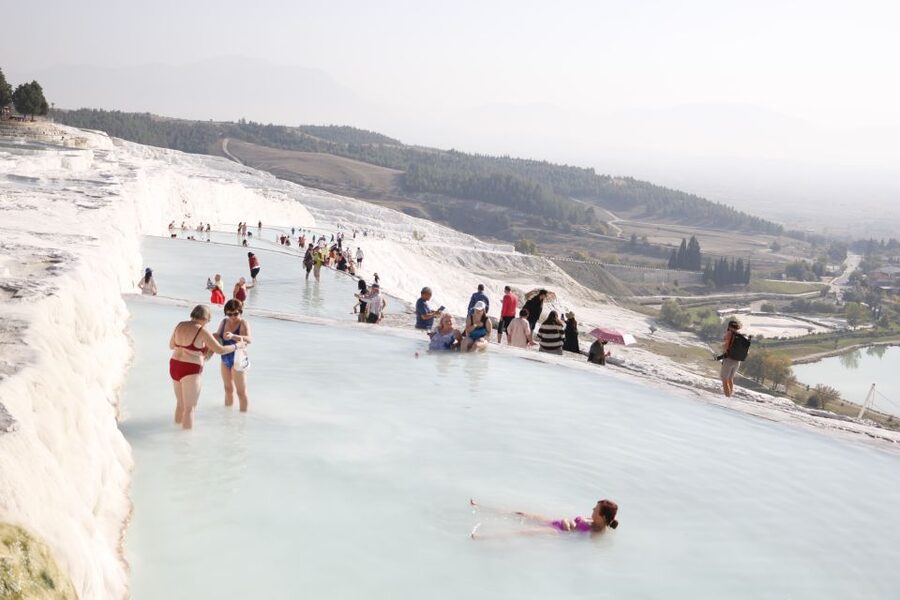
Pamukkale is famous for a look that feels unreal until you learn what created it. The water feeding the site comes up from underground at about 35.6 C, carrying high levels of calcium hydrocarbonate. When that warm, mineral-rich water reaches the surface, gases like carbon dioxide and carbon monoxide evaporate, and calcium carbonate starts to precipitate. Over time, that buildup creates the layered terraces you see today.
On this tour, you’re not just wandering. You get a guided walk focused on how the travertines formed and why the water matters. That context is useful because it changes how you photograph. Instead of chasing one perfect angle, you start noticing the texture differences between wet and dry sections, the slope of the terraces, and the way the channels guide where water used to flow.
You’ll also appreciate the practical side of a guided visit. The tour includes entrance fees and skip-the-ticket-line, which can save time when the site gets crowded. And because you’re with a small group, you can slow down when you want to read a panel or step up to a better viewpoint without feeling like you’re constantly getting left behind.
One reality check: the travertines are dependent on water availability, and conditions can shift. Some departures have seen areas dry, and there can be changes around the Cleopatra pool. If the main reason you booked is the full, Instagram-style view of every terrace, keep your expectations flexible.
More Pamukkale & Hierapolis Tours in Izmir
- Pamukkale Tour from Izmir
★ 5.0 · 806 reviews - From Izmir: Guided Pamukkale Full-Day Tour with Lunch
★ 4.5 · 190 reviews - From Izmir: Pamukkale Guided Tour with Lunch
★ 4.8 · 143 reviews
Hierapolis in one guided sweep: gates, temples, baths, and the underworld
Pamukkale’s white terraces sit next to another star attraction, Hierapolis, a Roman-era city with a long timeline of religious and civic life. The big win here is that you don’t treat the ruins like a checklist. Your guide stitches the places together so you understand what each area was for, from monumental entrances to daily life.
Here’s what you can expect to cover as you move through Hierapolis with your guide:
Necropolis
You’ll start with the city’s burial landscape. Necropolis zones help you see how important death rites and memorials were, and how the city kept growing and rebuilding over time.
Domitian Gate
This is the kind of landmark that immediately makes you stop and look up. A gate like this signals civic pride and control of movement, and it sets the tone for the Roman influence you’ll see throughout the complex.
Frontinus Street and Agora
Streets and squares are where you start connecting the stones to daily behavior. A street like Frontinus is about procession and movement, while the Agora represents commerce and public life. Even when columns are broken, the layout still shows you where people gathered.
Gymnasium and major gates
You’ll visit areas that connect to education, training, and civic identity. Gates such as the North Byzantine Gate also help show the city’s later phases, when old Roman space got adapted for new eras.
Fountain with Triton and Apollon Temple
Water features and religious buildings give you a different emotional texture than tombs and roads. The Fountain with Triton points to decorative public life and the role of water in urban design. Then Apollon Temple brings you into the religious focus, so you can see how Hierapolis leaned on cult worship as part of its identity.
Martyrium of St. Philip and the bridge
This stop is memorable because it feels grounded in story. A martyrium complex is a strong marker of early Christian influence, and the bridge adds a visual layer that helps you understand how routes and movement worked in the site.
Column Church
Columns are often what survive best, and here they help you imagine a larger structure even when parts are gone. It’s one of those spots where slow walking pays off, because you start noticing alignment and spacing.
Ruins of Plutonium
This is the underworld-themed site that people talk about for a reason. Plutonium ruins are strongly tied to the idea of a cave, a sacred geothermal feeling, and a dramatic spiritual story. Even if you only catch a few details from your guide, the purpose comes through: this wasn’t just scenery, it was belief made architectural.
Latrina and Roman Baths
The last phase often hits the most practical nerve. Latrines and Roman baths were social and functional, and they bring the city back to Earth. You see how infrastructure served daily life, not just ceremonies.
By the end, Hierapolis feels like a city, not a pile of fragments. That’s the real value of a guided loop, it turns disconnected ruins into a route you can follow with your brain.
Cleopatra Pool time: worth it, but plan for variables
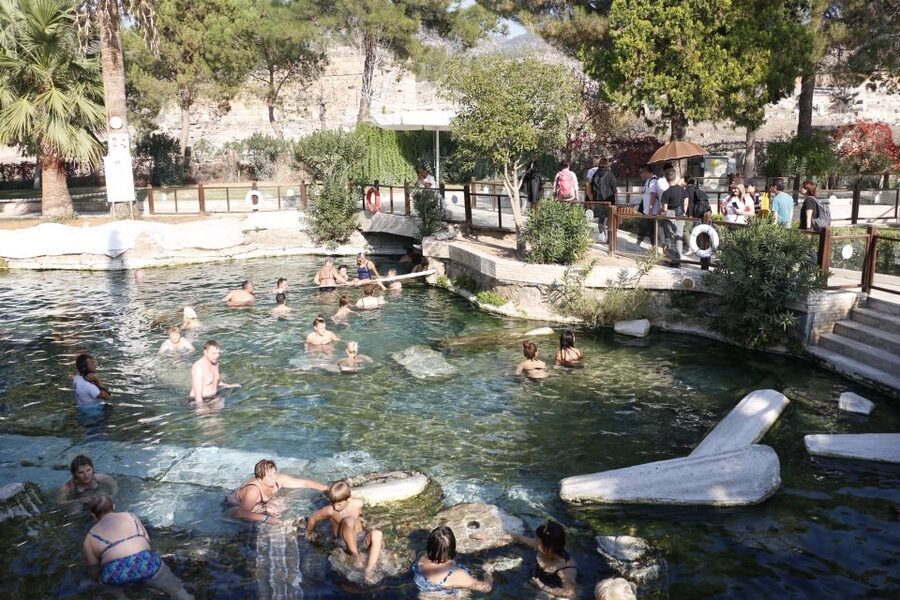
The tour experience often includes a chance to swim at the famous Cleopatra pool, with reports of free time around 50 minutes and water around 35 C. If you love short, relaxing breaks after walking, this is a strong payoff.
But here’s the honest part. Access and conditions are not guaranteed. One departure noted that a big portion of the natural terraces was dry and the Cleopatra pool was unavailable due to work. Another departure praised a swim and enjoyed the thermal feel.
So how do you protect your day? Treat the pool like an added bonus, not the core promise. If you do get time, you’ll be glad. If you don’t, you’ll still get the travertines and the Hierapolis ruins, which are the tour’s main anchors.
If you want to maximize your odds of enjoying the full range of sites, timing helps. Start the day ready to move quickly. Wear footwear that handles uneven ground. And bring a small towel. Even with guided time, you’ll want to feel comfortable enough to make use of whatever free minutes you’re given.
Lunch break: included buffet style, simple and filling
A good day trip stands or falls on lunch, because it affects the rest of your energy. Here, lunch is included, and it’s often described as a large, renovated restaurant with a buffet and desserts. That matters because buffet meals are easier when your day is packed. You’re not waiting on a single entrée, and you can eat at your pace.
It’s also a practical meal choice before Hierapolis, since you’ll still be walking and climbing through ruins. If you’re the type who gets cranky without a real meal, this is one of the smartest parts of the package.
All drinks are not included, so plan on buying water or choosing something else on your own. If you like to have control, bring a reusable bottle and refill when you can. Even then, on a 12-hour schedule, it’s smart to budget for drinks.
More Pamukkale and Hierapolis trips:
- Full Day Pamukkale and Hierapolis Tour from Izmir
★ 5.0 · 113 reviews - From Izmir: Pamukkale Full-Day Tour
★ 4.1 · 19 reviews - From Izmir: Pamukkale, Hierapolis and Karahayit Day Tour
★ 3.8 · 12 reviews - From Antalya/Kemer: Pamukkale & Hierapolis Day Trip w/Meals
★ 4.5 · 2,196 reviews
Price and logistics: is $150 good value for this kind of day?
At $150 per person for about 12 hours, the value depends on what you’d otherwise do on your own. This tour is priced like a full service day: professional English speaking guide, entrance fees, lunch, air-conditioned vehicle, and hotel pickup and drop-off logistics. You also avoid ticket-line friction, which can be a small but real time saver.
What you get here is not just transportation. You’re paying for interpretation. Pamukkale’s science story and Hierapolis’ layout are easier when someone turns the site into a narrative you can actually follow. Without that, you might see the same places but miss the why behind them.
The main consideration is that it is a long day. The drive from Izmir is often described as lengthy. If you dislike long road time, you’ll want to plan for comfort. If you do okay on the road, this can feel like an efficient way to pack a natural wonder and a major archaeological complex into one visit.
A small group of up to 14 participants helps a lot. It usually means fewer interruptions, faster movement between stops, and more chance to ask questions without shouting over a crowd. One review also described comfortable vans and the guide checking in with the group, which is a detail you’ll feel during the day.
Practical tips so the day feels smooth
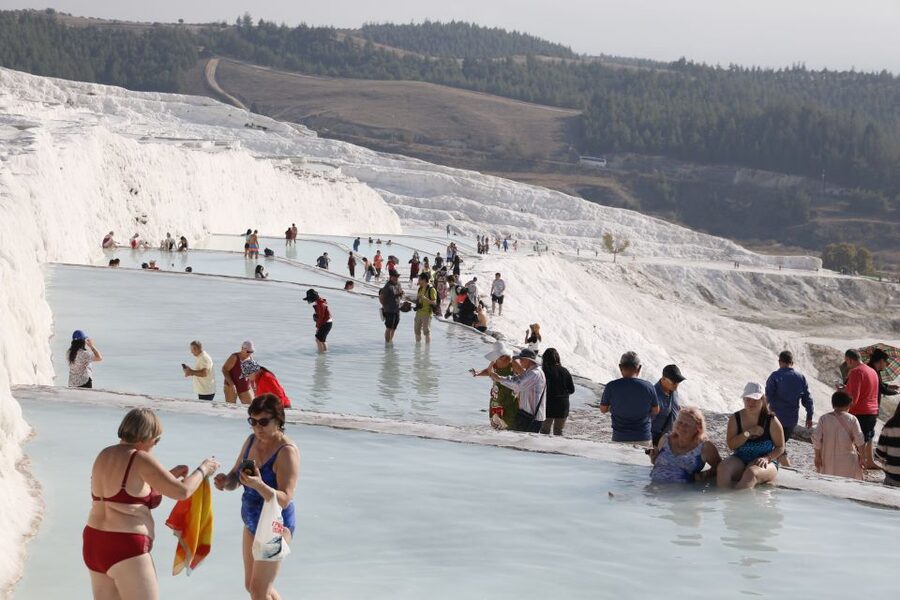
This trip mixes two worlds: walking a natural site with mineral terraces and moving through uneven archaeological ground. That means you should dress and pack for both, not just one.
- Shoes matter: expect uneven surfaces at both Pamukkale and Hierapolis. Choose something with grip.
- Sun and heat are real: the travertines and open ruins get exposed. Bring a hat and sunscreen.
- Bring a cover-up for changes in weather: one departure noted that weather didn’t cooperate, and the guide still did their best. Layers help.
- Money for drinks: lunch includes food, drinks do not.
- Swim time, if available, is short: plan to enjoy it, not to treat it like an all-day spa. Reports suggest around 50 minutes when the pool is open.
If you’re traveling with people who want different things, this tour can still work. Nature lovers get Pamukkale’s view and the water story. Architecture and history fans get Domitian Gate, Apollon Temple, Roman Baths, and Plutonium. Even if your group argues about which photo is best, you’ll have enough stops to make everyone feel covered.
And if you’re worried about language, the tour runs with an English live guide. In several comments, guides like Mr. Alpin were praised for clear explanations that were easy to follow.
Should you book the Pamukkale Day Trip from Izmir?
I think it’s a good booking if you want a one-day solution that combines Pamukkale travertines and Hierapolis ruins with real guidance. The small group size, included lunch, and English speaking interpretation are what make it feel worth the cost.
I would hesitate if swimming at the Cleopatra pool is your number one must-do and you cannot handle the possibility of closures or dry terrace conditions. Also consider your tolerance for a long day of driving, since the Izmir route can take time.
If you like structured sightseeing, don’t want to manage logistics on your own, and you can treat the pool as a bonus, this tour is a solid way to experience one of Turkey’s most dramatic natural and ancient sites in a single day.
Newest Izmir reviews on the site
- Kusadasi: Ephesus & Mary’s House Tour with Ticket★ 4.9 · 44 reviews
- Ephesus and Sirince Tour from Izmir / Kusadasi★ 4.6 · 22 reviews
- Ephesus, Virgin Mary’s House & Sirince Village from Izmir★ 4.9 · 19 reviews
- From Izmir: Pamukkale Full-Day Tour★ 4.1 · 19 reviews
- Izmir City Tour★ 4.7 · 9 reviews
- Full-Day Tour of Ancient Ruins in Ephesus from Izmir★ 4.5 · 43 reviews
- From Izmir: Seven Churches of Revelation Multi-Day Tour★ 4.4 · 9 reviews
- From Izmir: Pamukkale, Hierapolis and Karahayit Day Tour★ 3.8 · 12 reviews
Pamukkale & Hierapolis Tours, compared.
From Antalya/Kemer: Pamukkale & Hierapolis Day Trip w/Meals
Read our review →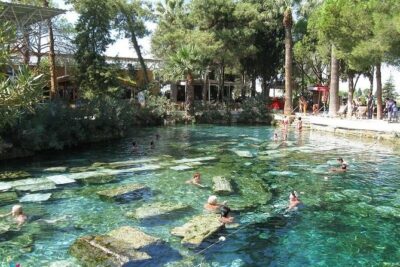
Pamukkale Hierapolis and Cleopatra’s Pool Tour with lunch from Antalya
Read our review →
From Antalya/Kemer: Pamukkale and Hierapolis Tour with Lunch
Read our review →
Antalya Pamukkale Hot Springs & Hierapolis Tour With Lunch
Read our review →

Full-Day Tour of Pamukkale from Antalya with Lunch
Read our review →

Full-Day Tour to Pamukkale From Marmaris w/ Breakfast & Lunch
Read our review →Browse the lists this tour appears in