
REVIEW · EPHESUS TOURS
NEW: Private The Most Detailed Ephesus Shore Excursion / with Lunch
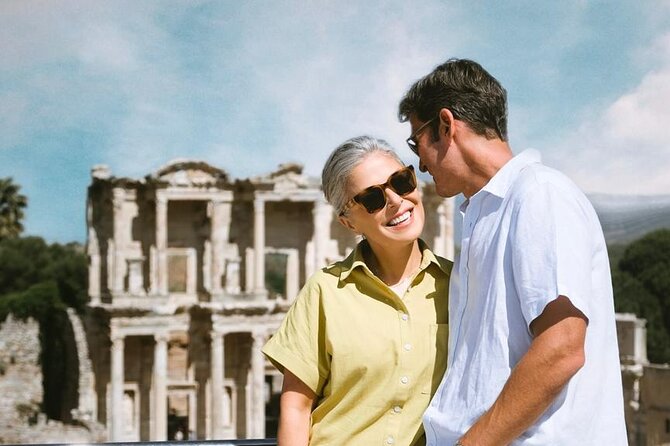
Ephesus with smart timing and zero fuss. This private tour pairs air-conditioned transport with a licensed English guide, plus a Turkish lunch and some deeper stops many Ephesus days miss, like the Terrace Houses and the State Agora. I love the private, customizable pace that helps you actually see what you came for, and I also like the guaranteed skip-the-lines setup. The main drawback: big-ticket sites still have separate entrance fees, so budget for those on top of the tour price.
If you’re coming from Kusadasi by cruise, the pickup is designed for port schedules, with clear meeting points at the exit gate of the immigration terminal. Guides can be first-rate, and some guests specifically recommend requesting guides like Ahmet or Mary when possible. Just remember you are doing a lot of walking, even with a comfortable van ride between stops.
In This Review
- Key Things To Love About This Private Ephesus Day
- How This Private Ephesus Shore Excursion Actually Runs
- Pickup in Kusadasi, Plus Clear Meeting Points for Cruise Days
- Stop 1: Meryemana (Virgin Mary’s House) for a Quiet Reset
- Stop 2: Ancient City of Ephesus, Packed but Guided
- Stop 3: State Agora, Where Business Meets Government
- Stop 4: The Odeion, a Small Theatre with Two Jobs
- Stop 5: Temple of Domitian, Emperor Power Made Stone
- Stop 6: Hercules Gate, and a Reminder That Streets Changed Over Time
- Stop 7: Temple of Hadrian, One of Curetes Street’s Best-Preserved Views
- Stop 8: Ephesus Terrace Houses, Roman Daily Life Behind Glass
- Stop 9: Library of Celsus, Monumental Tomb and Cold-Climate Storage
- Stop 10: Ephesus Ancient Greek Theatre, and the One Included Admission
- Stop 11: Temple of Artemis, Foundations of a Seven-Wonders Level Imagination
- Stop 12: Basilica of St. John, Christian Memory in a Roman Setting
- Lunch at a Local Restaurant, Plus the Break You’ll Appreciate
- Price and Logistics: What You Pay Now, What You Pay at the Gates
- Which Stops Make This Tour Feel More Detailed Than the Usual Ephesus Day
- Guide Matters, and You Can Often Request a Favorite
- Who Should Book This Private Ephesus Shore Excursion
- Should You Book This Ephesus Tour?
- FAQ
- Is this tour private?
- How long is the Ephesus shore excursion?
- What language is the tour guide?
- What’s included in the price?
- Are entrance fees included?
- What about drinks during lunch?
- Where do cruise passengers meet the guide?
- Where is pickup from hotels?
- What fitness level do I need?
- Is free cancellation available?
Key Things To Love About This Private Ephesus Day
- Skip-the-lines planning, so you spend more time inside ruins and less time standing around
- Lunch included at a local restaurant, with drinks not included
- A deeper Ephesus route, including the State Agora, Terrace Houses, and Curetes Street highlights
- Private format, so your guide can shift the day for your interests and pace
- Modern Mercedes van with parking fees covered
- English-speaking licensed guide, with the day run like a real tour, not a bus script
How This Private Ephesus Shore Excursion Actually Runs
This is built for a smooth half day to full day, roughly 5 to 7 hours. You get pickup and drop-off, and you ride in a Mercedes air-conditioned vehicle. That matters at Ephesus, because heat and long stone routes can zap energy fast.
The big value piece is the guide-driven rhythm. You are not just dropped at a gate and pointed at a map. You get a licensed English guide, a planned route across the main Ephesus sights, and the promised advantage of skipping long lines. In plain terms, it can save you a lot of time, especially if you have a cruise schedule.
Then there’s lunch. This tour includes a Turkish lunch, but drinks are not included, so if you want bottled water, soda, or anything beyond coffee or tea, plan for that extra cost.
One more practical note: the tour is described for travelers with moderate physical fitness. You’ll be on uneven ground, climbing stairs at least once (Terrace Houses), and walking between stops. A comfortable day here is mostly about pacing, shoes, and water.
More Ephesus Tours in Kusadasi
- FOR CRUISERS: Skip The Lines PRIVATE EPHESUS TOUR &On Time Return
★ 5.0 · 8,527 reviews - Top Choice For Cruisers: Ephesus, Mary’s House WITH TICKETS+LUNCH
★ 5.0 · 7,233 reviews - PRIVATE EPHESUS TOUR FOR CRUISERS: On-time Return and Skip-Line
★ 5.0 · 5,807 reviews
Pickup in Kusadasi, Plus Clear Meeting Points for Cruise Days
If you’re a cruise passenger, this tour meets you at the exit gate of the immigration terminal of the cruise port. You’ll be looking for a board with the OTTI Travel sign. For hotel pickups, the guide meets you by the hotel reception.
That kind of clarity is underrated. Port days are chaos by default. Getting the meeting point nailed down reduces stress, and it helps you stay on time for reboarding.
Also helpful: you’ll get a mobile ticket, and confirmation is sent at booking time. It’s one less thing to scramble for when you’re juggling shore tenders, passport lines, and sunscreen.
Stop 1: Meryemana (Virgin Mary’s House) for a Quiet Reset
You start at Meryemana, also called the House of Virgin Mary. The stop is about 30 minutes. Admission is not included, so you’ll pay the Virgin Mary House fee separately.
Why this stop is worth it: it gives you a calmer, more reflective start before you hit the full scale of Roman Ephesus. It also changes the mood of the day. Ephesus is huge and loud in your head, because it’s all those columns, streets, and sculptures. Meryemana helps you ease in before the history marathon.
Practical tip: keep this early stop in mind if you get tired later. If you’re sensitive to heat, the morning energy can make the first 30 minutes feel much more comfortable.
Stop 2: Ancient City of Ephesus, Packed but Guided
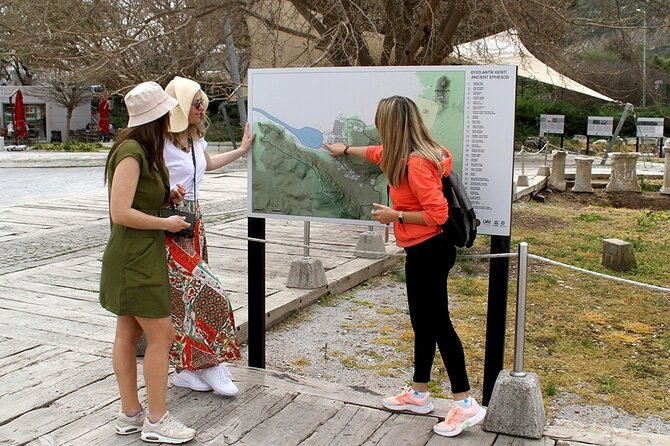
Next comes the Ancient City of Ephesus, about 2 hours. Admission is not included, and your guide’s job is to make this overwhelming site feel organized.
Here’s what’s covered in this part of the route, based on the tour’s planned stops: Harbor Street, the theatre area, Marble Street, the gate of Mihridates and Mazues, Commercial Agora, latrina, Hadrian Temple, Scolastica Baths, Trajan Fountain, Curetes Street, Polio Fountain, Memnius Monument, the Temple of Domitian, the Prytaneion, Odeon, and the State Agora.
What you should expect: you’re walking through multiple city zones, not just circling the famous postcard spots. That’s what you pay for with a private guided day.
The upside: you get a story, not just a checklist. The downside: it’s still a dense route. If you’re prone to aching feet, bring that up early. A good guide can adjust breaks without skipping the best moments.
More Ephesus visits:
- PRIVATE NO HIDDEN FEES Ephesus, Mary’s House Guided Tour /GRP OPT
★ 5.0 · 2,455 reviews - For Ship Guests:BEST SELLER EPHESUS PRIVATE TOUR & On Time Return
★ 5.0 · 2,029 reviews - ALL INCLUDED: Ephesus Ruins, Mary’s House Tour incl ENTRY TICKETS
★ 5.0 · 1,670 reviews - Ephesus Temple of Artemis and House of Mary Private Half Day Tour
★ 5.0 · 1,573 reviews
Stop 3: State Agora, Where Business Meets Government
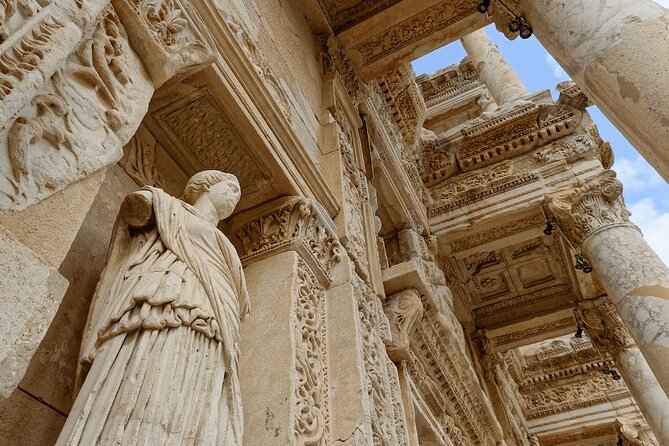
The State Agora stop is about 15 minutes, with no included admission fee. This is not always on the typical “greatest hits only” Ephesus itinerary, and that’s a big reason it’s a highlight of this tour.
Why it matters: this was the agora for government business, not shopping. You’re also told about findings from excavations, including graves from the 7th to 6th centuries B.C. plus a stone-paved road and an archaic terra cotta sarcophagus.
Another cool detail here is the water reservoir corner. Ephesus needed reliable water, and the reservoir’s water was brought in through the Pollio Aqueduct, with remains reportedly visible about 5 kilometers away along the Selçuk-Aydin highway.
If you like when a place explains how a city worked, this stop scratches that itch. It’s less about “look how old” and more about “how did they run a metropolis?”
Stop 4: The Odeion, a Small Theatre with Two Jobs
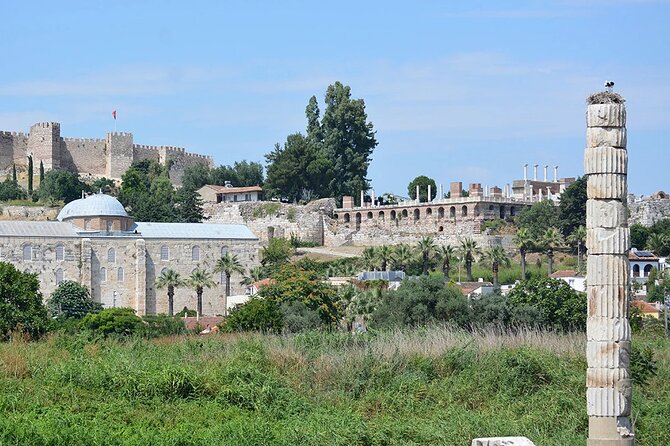
The Odeion stop is another about 15 minutes, admission not included. It’s described as a small theatre shape with a stage building and seating, but it had a double function.
First use: as a Bouleuterion, where the Boules or senate held meetings. Second use: as an Odeum, a concert hall for performances.
Capacity is noted at about 1,500 spectators. The building dates to the 2nd century A.D, ordered by Publius Vedius Antonius and his wife Flavia Paiana.
Practical value: this stop helps you see how Roman entertainment and politics overlapped. Even if you’re not a “theatre person,” it’s one of the best ways to understand ancient civic life without needing extra reading.
Stop 5: Temple of Domitian, Emperor Power Made Stone
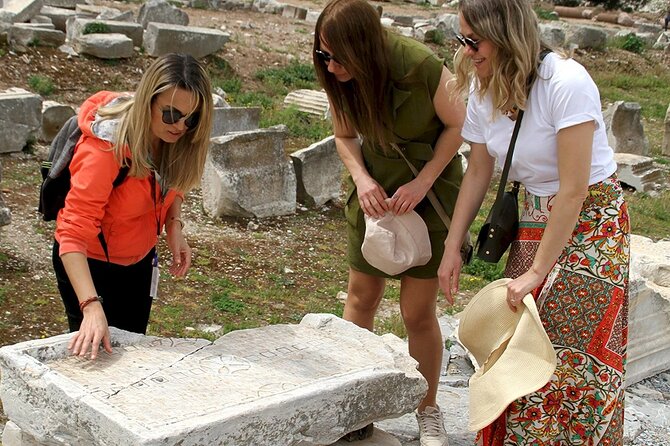
About 15 minutes, admission not included.
The Temple of Domitian is positioned on the south end of Domitian Street and is described as the first structure in Ephesus dedicated to an emperor. It sits on a high terrace on vaulted foundations. The building plan is pro-style, with columns on both the short and long sides, plus extra columns in front of the cella.
One reason history-lovers like this stop: it ties directly to the concept of an emperor being honored through a temple, including the “neocoros” honor referenced for the city.
A practical note: terrace and stairs can make the area feel steeper than you expect. Take your time and watch your footing. The stones can be slick in shade.
Stop 6: Hercules Gate, and a Reminder That Streets Changed Over Time
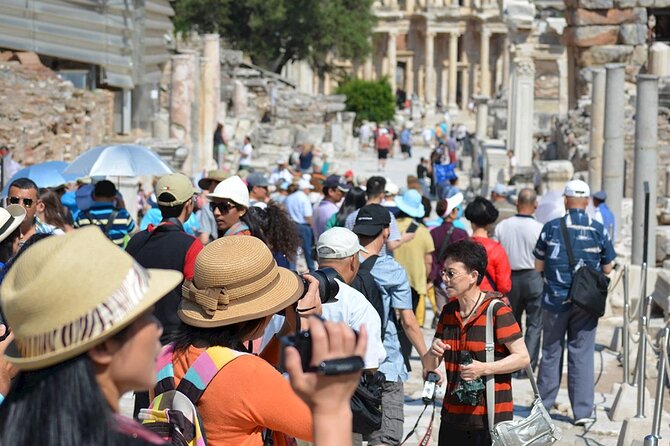
Hercules Gate is about 15 minutes, admission not included. It’s named for a relief of Hercules. You’re told the gate was moved to its current place in the 4th century A.D, while the relief dates back to the 2nd century A.D.
What you should notice: the remaining columns, plus how the gate narrowed access to Curetes Street. The description also suggests the street became more pedestrian by the 4th century, which is a useful reminder that ancient city life was not fixed. It evolved.
If you’re the kind of traveler who likes to think like a city planner, this is a good mental exercise.
Stop 7: Temple of Hadrian, One of Curetes Street’s Best-Preserved Views
This is one of the best-preserved stops on Curetes Street. Time is about 10 minutes, and admission is not included.
The facade has four Corinthian columns supporting a curved arch, with a relief of Tyche in the center. The side columns are square. In front, the pedestal with inscriptions includes bases for statue groups between 293 and 305 C.E., and specific emperors are named in the tour details.
Why it’s a standout: you get the sense of “wow, they planned this for visitors,” even though much is ruin now. It’s also positioned on a street lined with major sites, so you get that strong “walking through time” feeling.
Tip: this is an area where good shoes really pay off. You’ll be shifting position to see details like column shapes and the arch.
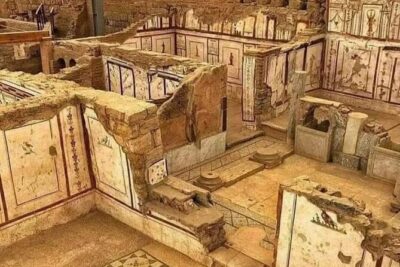
Stop 8: Ephesus Terrace Houses, Roman Daily Life Behind Glass
Terrace Houses take about 30 minutes, admission not included.
This stop is a big reason this tour feels different from basic Ephesus days. Terrace Houses are described as the homes of wealthy Romans. You’re told they were built on three terraces following a Hippodamian right-angle plan.
The buildings cover residential units across terraces, with the oldest dating to the 1st century B.C., and use continuing until the 7th century A.D. The ruins are covered by protective roofing, and mosaics and frescos were consolidated. Two houses are opened to the public as a museum.
What you’ll likely appreciate: you’re not only seeing public monuments. You get a peek into family and lifestyle during Roman rule, which turns Ephesus from a “big ruins” visit into a more human story.
The drawback: stairs. You may feel it here more than at other stops. If you want to move slower, tell your guide early and keep energy for this section.
Stop 9: Library of Celsus, Monumental Tomb and Cold-Climate Storage
Time is about 30 minutes, admission not included.
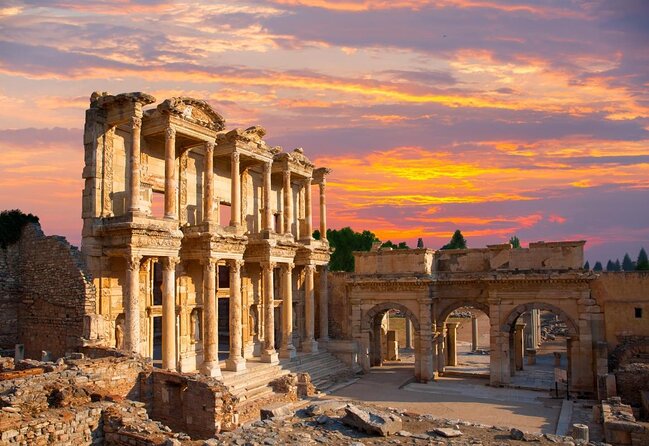
The Library of Celsus was built in 117 A.D. It is described as a monumental tomb for Gaius Julius Celsus Polemaeanus, with his son Galius Julius Aquila credited in the details.
You’re told about the scroll storage system: manuscripts stored in cupboards in niches, with double walls behind bookcases to protect against temperature and humidity extremes. The capacity is described as more than 12,000 scrolls.
Why this stop is more than a photo op: it’s a lesson in ancient engineering. They built for storage conditions. That makes the library feel more practical and less mythical.
One more bonus: Celsus Library is also one of those spots that helps you orient the rest of the day. Once you understand where it sits, the route through Ephesus starts to feel logical.
Stop 10: Ephesus Ancient Greek Theatre, and the One Included Admission
This stop is about 25 minutes, and the admission ticket for the Ephesus Ancient Greek Theatre is listed as included.
The theatre is described as the most magnificent structure in Ephesus, with initial construction in the Hellenistic period in the 3rd century B.C., later enlarged during Roman times into the style you see.
It’s noted as the largest in Anatolia, with a capacity of about 25,000. Seating rows, walkways called diazoma, and three sections of seats are described, including an Emperor’s Box in the lower section.
You’re also told the theatre served more than entertainment, hosting religious, political, and philosophical discussions, plus gladiator and animal fights.
Value of the included admission: it removes one more line-item. It also means your guide can keep the timing flowing without stopping to handle fees for that specific site.
Practical tip: sit for a minute and look up. The scale only hits once your eyes adapt to the seating pattern.
Stop 11: Temple of Artemis, Foundations of a Seven-Wonders Level Imagination
Time is about 40 minutes, admission not included.
The Temple of Artemis is referenced as one of the Seven Wonders of the ancient world. You can only see foundations today, because over centuries the area became swampy. The tour notes marble foundations and sculptured column capitals and shafts, and says the best remains are displayed in the London British Museum.
This stop can feel “less dramatic” if you’re expecting full columns. But it still works if you treat it like a lesson in how natural conditions reshape what survives.
If you need help with perspective, ask your guide to explain what parts you are looking at. That simple step turns foundations into understanding.
Stop 12: Basilica of St. John, Christian Memory in a Roman Setting
Basilica of St. John is about 40 minutes, admission not included.
The tour explains tradition: St. John spent his last years in the Ephesus region and was buried on the southern slope of Ayosolug Hill. A small chapel was constructed over the grave in the 4th century, then changed into a basilica during the reign of Emperor Justinian (527 to 565 A.D.).
It also connects Christian history events in the region, including the idea that John came with Mary and wrote his Gospel in Ephesus and Revelation on Patmos.
This is a meaningful pairing with the ruins because you see continuity in the meaning of place. Ephesus is not only ancient Rome. It keeps becoming something else across centuries.
Lunch at a Local Restaurant, Plus the Break You’ll Appreciate
Lunch is included in the tour price. The tour details say lunch happens at a local restaurant, and drinks at lunch are not included.
What I like about including lunch here is timing. After the early Meryemana and the dense ancient-city walking, you need the reset. A good lunch break keeps your afternoon from turning into a shuffle-and-cope situation.
From the experience of past guests, the meal tends to be plentiful, and some lunches include local touches like fig tasting or a pomegranate drink with meals. There’s also mention of olive-oil and pomegranate flavors showing up as part of the salad dressing.
Practical tip: if you’re visiting off-peak, lunch might be your longest pause. Don’t overdo water-chugging right before you re-enter hot ruins. Sip steadily and save energy for Terrace Houses and Celsus.
Price and Logistics: What You Pay Now, What You Pay at the Gates
Base price is $79.20 per person. That includes: pickup and drop-off, a licensed English guide, a Mercedes air-conditioned van, parking fees, lunch, and the promised skip-the-lines advantage.
But you should budget entrance fees separately. The tour lists these as not included:
- Ephesus Ancient City: €40 per person
- Virgin Mary House: €18 per person
- Terrace Houses: €15 per person
- St John Basilica: €6 per person
The Ephesus Ancient Greek Theatre admission is listed as included, which helps.
So the value equation looks like this: you are paying for the logistics, the guide, and the time saved. If you add up admissions, you can see why shopping around on price alone is not the full story. This tour aims to reduce your hassle and help you see the more detailed parts of Ephesus without guessing.
Also, plan extra for drinks at lunch.
Which Stops Make This Tour Feel More Detailed Than the Usual Ephesus Day
Many Ephesus tours focus on the obvious headline sites. This one includes several extra layers, which is where the “most detailed” label feels real.
The State Agora gives you the government angle, not just the architecture. The Odeion adds the political meetings plus concert-hall dual function. Terrace Houses shift you from public monuments to private life, mosaics, and frescos. And the route through Curetes Street includes Hadrian Temple and Hercules Gate, which gives you a more continuous “street walk” feel.
If you like your ancient travel with explanations and fewer gaps, those extra stops help you build an actual understanding instead of just collecting images.
Guide Matters, and You Can Often Request a Favorite
English speaking, licensed guides run the show. Names that show up in strong recommendations include Selin, Nesli, Mehmet, Ahmet, Tas, Asli, Özgür, and Mary.
If you have a favorite style, it helps to request a guide when booking, especially if you’ve heard that Ahmet or Mary can make the day feel smoother and more personal. A good guide also helps you manage timing, especially if your cruise ship or your own energy level is the real clock.
Who Should Book This Private Ephesus Shore Excursion
This is a strong match if:
- you want a private day with pickup and drop-off
- you care about seeing more than only the most famous stones
- you prefer a guided route that handles timing and line stress
- you’re okay with moderate walking and a few stair-heavy areas
It’s also a good option for families, especially if kids need storytelling and adults want structure. One more reason: the schedule is long enough to cover key zones, but short enough to keep the day from stretching into an all-day endurance test.
If you’re the kind of traveler who only wants the top 2 or 3 sites, you might feel this is more than you need. But if you want depth, it’s built for that.
Should You Book This Ephesus Tour?
I’d book it if your priority is a well-run day with smart use of time, lunch included, and a route that reaches past the “standard Ephesus photo stops.” The private format and skip-the-lines plan are practical value, not fluff.
I would think twice only if you hate paying separate entrance fees, because several major sites are extra. If that cost is a dealbreaker, you might prefer a different package. But if you’re comfortable with the added gates and you want the Roman-era details plus Terrace Houses, this tour is a solid choice for a memorable, not-chaotic day in Kusadasi.
FAQ
Is this tour private?
Yes. It’s a private tour/activity, and only your group participates.
How long is the Ephesus shore excursion?
It runs about 5 to 7 hours.
What language is the tour guide?
The tour is offered in English.
What’s included in the price?
Included are an English speaking professional licensed tour guide, pickup and drop-off service, guaranteed skip-the-long-lines, a Mercedes air-conditioned vehicle, parking fees, and lunch.
Are entrance fees included?
No. Admission for Ephesus Ancient City is €40, Meryemana (Virgin Mary’s House) is €18, Terrace Houses is €15, and St John Basilica is €6. The Ephesus Ancient Greek Theatre entrance is listed as included.
What about drinks during lunch?
Drinks at lunch are not included.
Where do cruise passengers meet the guide?
Cruise passengers meet at the exit gate of the immigration terminal of the cruise port, with a board showing the OTTI Travel sign.
Where is pickup from hotels?
For hotels, the guide meets you by the hotel reception.
What fitness level do I need?
The tour states you should have a moderate physical fitness level.
Is free cancellation available?
Yes. You can cancel for a full refund up to 24 hours before the experience starts.
Newest Kusadasi reviews on the site
- FOR CRUISERS /Top Seller Ephesus Private Tour / On Time Return★ 5.0 · 21 reviews
- Private Tour : Biblical Ephesus Tour for Cruisers from Kusadasi ( Ephesus ) Port★ 5.0 · 55 reviews
- FOR CRUISERS: Best of Ephesus Private Tour (SKIP-THE-LINE & ON-TIME RETURN)★ 5.0 · 40 reviews
- Private Tour : Customized Ephesus Tour for Cruisers from Kusadasi Ephesus Port★ 5.0 · 16 reviews
- Small Group Ephesus and Sirince Day Tour from Kusadasi/Selcuk★ 5.0 · 23 reviews
- Private Tour : Best Seller Ephesus Private Tour From Cruise Port★ 5.0 · 19 reviews
- FROM IZMIR Cruise Port: Ephesus and Mary’s House Private Tour★ 5.0 · 21 reviews
- Pamukkale Tour From Selcuk★ 5.0 · 18 reviews
Ephesus Tours, compared.
FOR CRUISERS: Skip The Lines PRIVATE EPHESUS TOUR &On Time Return
Read our review →Top Choice For Cruisers: Ephesus, Mary’s House WITH TICKETS+LUNCH
Read our review →PRIVATE EPHESUS TOUR FOR CRUISERS: On-time Return and Skip-Line
Read our review →PRIVATE NO HIDDEN FEES Ephesus, Mary’s House Guided Tour /GRP OPT
Read our review →
For Ship Guests:BEST SELLER EPHESUS PRIVATE TOUR & On Time Return
Read our review →
ALL INCLUDED: Ephesus Ruins, Mary’s House Tour incl ENTRY TICKETS
Read our review →Ephesus Temple of Artemis and House of Mary Private Half Day Tour
Read our review →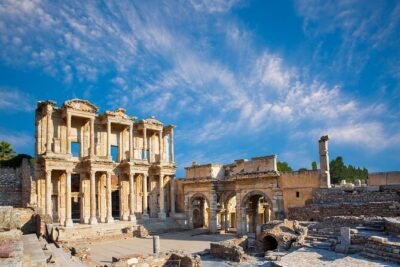
PRIVATE TOUR FOR CRUISERS: Mary’s House (Meryemana) and Ephesus
Read our review →Browse the lists this tour appears in