
REVIEW · HAGIA SOPHIA & BLUE MOSQUE TOURS
Istanbul: Whirling Dervish Ceremony next to Hagia Sophia
One hour, and time slows down.
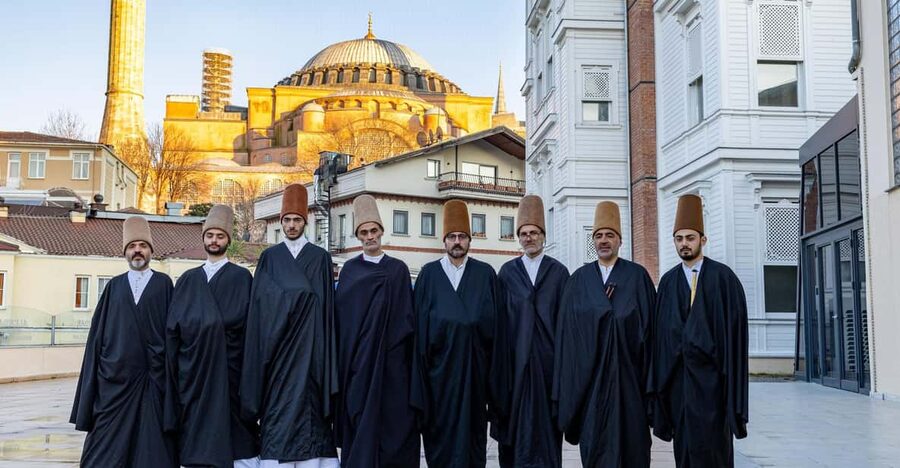
This Whirling Dervish (Sema) ceremony is held right by Hagia Sophia, with classic live Turkish music and a real cultural explanation before and after. It is one of those Istanbul experiences that feels more like a spiritual ritual than a “show,” even though it is still visitor-friendly.
I love how the spoken context helps you understand what you are seeing, not just watch spinning for spinning’s sake. I also love the live music, with traditional instruments like strings, drums, and flutes that set the pace for the ritual.
One thing to consider: sound and announcements can be hit or miss at the very start, so if you are sensitive to audio clarity, arrive calm, settle in early, and focus on the music and the ceremony itself.
In This Review
- Key Things to Know Before You Go
- A Sufi Sema Ceremony by Hagia Sophia (and Why That Matters)
- Getting There: Basilica Cistern to the White Wooden House
- The 55 Minutes: How the Ceremony Actually Unfolds
- Before the dervishes: explanation and setup
- The start: instrumental music
- The turning: serenity, then acceleration
- Included drink moment
- Music, Meaning, and the Symbols You Might Miss
- The Venue Feel: Why This Doesn’t Feel Like a Typical Ticketed Show
- Price and Value: Is $17 Worth It?
- Who This Ceremony Is For, and Who Might Prefer Something Else
- Practical Tips That Improve Your Experience Fast
- Should You Book This Whirling Dervish Ceremony Next to Hagia Sophia?
Key Things to Know Before You Go
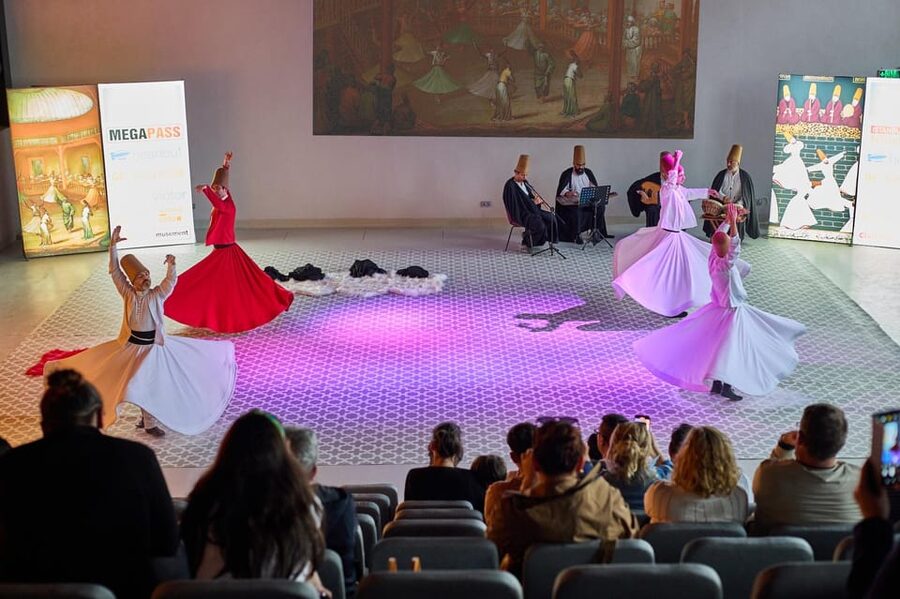
- UNESCO-listed Sema next to Hagia Sophia, so you get spirituality in the middle of Istanbul’s history
- 55 minutes, which keeps the experience focused and paced, not dragged-out
- Live Turkish music with traditional instruments that match the ceremony’s tempo
- A licensed host plus a smart audio guide in 7 languages to explain symbolism in plain language
- A local tea or sherbet included, a small but very Istanbul touch before you head back out
- A respectful setting with a no-noise rule, which is part of why it feels different from typical performances
A Sufi Sema Ceremony by Hagia Sophia (and Why That Matters)
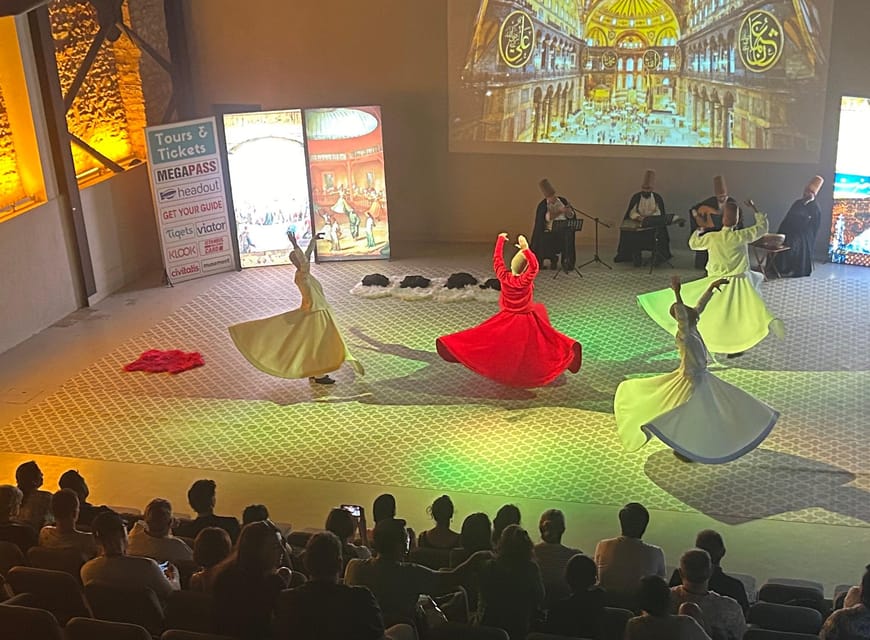
The Whirling Dervish ceremony you’ll see in Istanbul is known as the Sema, a ritual practiced by members of the Sufi tradition. The important part is not the costumes, the props, or the “cool factor.” The point is the rhythm, the repetition, and the symbolism built into every movement and sound.
What makes this version especially compelling is the location. Being near Hagia Sophia puts the ritual in the same city where centuries of faith, art, and debate have overlapped. You’re not escaping Istanbul to find something “somewhere else.” You’re doing the opposite: watching a living tradition right where you already came for landmarks.
This is also described as UNESCO Intangible Cultural Heritage, which matters because it signals more than “interesting history.” It’s a cultural practice with continuity and meaning. In this ceremony, the music pieces performed are said to come from the 1400s to early 1800s, which helps you feel the time depth behind what looks like a simple turning dance.
More Turkish Night Shows in Istanbul
- Istanbul: Bosphorus Dinner Cruise & Turkish Night Show
★ 4.8 · 12,954 reviews - Istanbul: Hodjapasha Whirling Dervishes Show & Exhibition
★ 4.4 · 4,790 reviews - Istanbul: Bosphorus Dinner Cruise with Turkish Night Show
★ 4.6 · 1,950 reviews
Getting There: Basilica Cistern to the White Wooden House
Your start point is next to the Basilica Cistern. You meet the host near the entrance, and the reception desk is at the gate of a giant white wooden house. The gate opens about 30 minutes before the ceremony begins, so you have time to get oriented without rushing.
Here’s the practical tip I’d follow: don’t treat the waiting time as downtime. The pre-ceremony explanation is a big part of what makes this work. When you arrive early, you can hear what is being said, see where you’ll sit, and take care of practical stuff like restrooms before the ritual starts. The ceremony setting values quiet, and once it begins, you’ll want to stay in the moment.
Also, you’re required to keep things respectful. Making noise is not allowed, and silence matters. That means no casual chatting once you settle in, and no speakerphone moments (your future self will thank you).
The 55 Minutes: How the Ceremony Actually Unfolds
The whole experience runs about 55 minutes, and it does a smart job of moving you through a full emotional arc without eating your evening.
Before the dervishes: explanation and setup
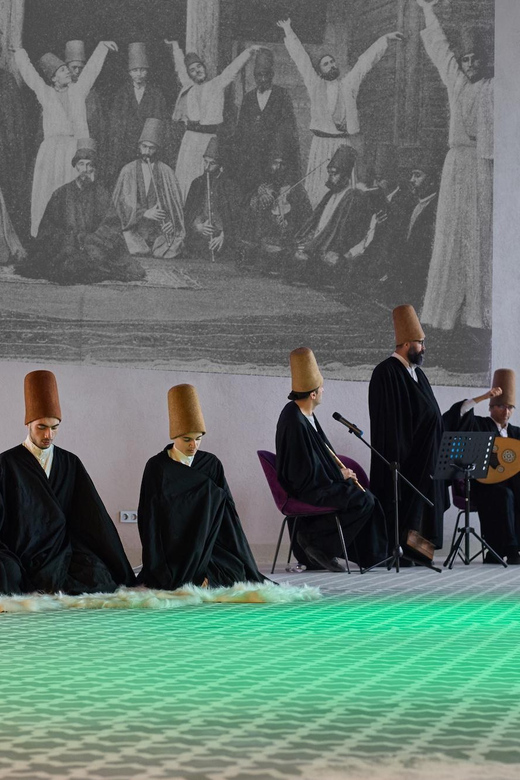
You begin in a traditional wooden-house salon. A professional host explains what you are about to see, both before and after the ritual. That framing matters because the ceremony includes gestures, posture changes, and shifts in tempo that are easy to miss if you come in cold.
You also get a smart audio guide with content in 7 languages (English plus German, French, Italian, Russian, Spanish, and Arabic). The guide supports the spoken explanation, so even if the host speaks quickly, you still have backup.
Same part of the country, a different kind of day:
- Istanbul: Bosphorus Dinner Cruise & Show with Private Table
★ 4.8 · 62,058 reviews - Istanbul: Daytime or Sunset Sightseeing Cruise & Audio Guide
★ 4.8 · 14,430 reviews - Best of Istanbul 1, 2 or 3-Day Private Guided Istanbul Tour
★ 5.0 · 8,922 reviews - Istanbul: Basilica Cistern Fast-Track Entry and Audio Guide
★ 4.6 · 7,521 reviews
The start: instrumental music
The ceremony begins with instrumental music played live, using traditional instruments such as strings, drums, and flutes. This is a good moment to “tune in” rather than judge right away. Early on, the music is doing work for you, setting the rhythm that the dervishes will embody.
The turning: serenity, then acceleration
Then the prayers begin, and the whirling dervishes arrive in serenity. In accordance with the rhythm, their motions accelerate, and the ceremony’s pacing becomes almost like breathing, slow and controlled at first, then building. The overall idea is harmony and unity, not performance fireworks.
Watch for the changes in how they hold their arms and how their balance shifts. The ritual includes symbolic hand gestures, and you’ll be given time to understand them through the host’s explanation and the audio guide.
Included drink moment
At some point you’ll be offered a local drink of the day, choosing between tea or sherbet, plus water. It’s not a “meal break.” It’s a small pause that feels appropriate for the setting and gives your body a reset before you head back into Istanbul’s bustle.
Music, Meaning, and the Symbols You Might Miss
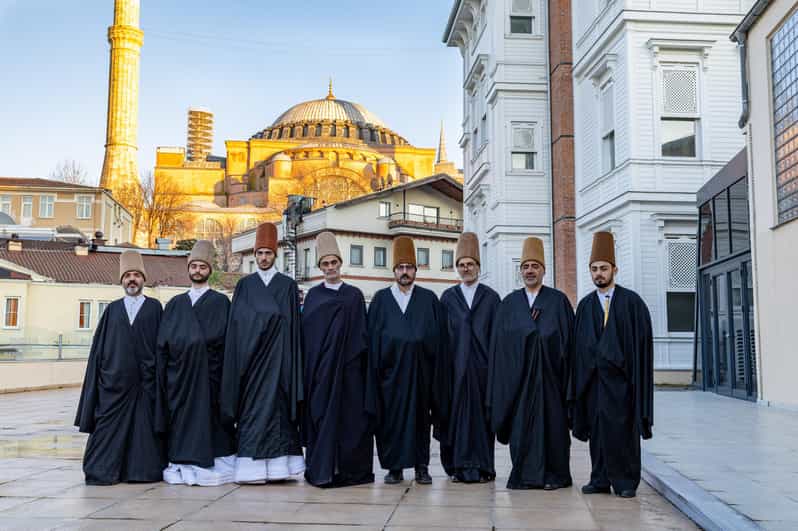
This is one of those experiences where the details make it better, not harder. If you go expecting a spectacle, you might find it calmer than you planned. If you go willing to follow the rhythm, it can feel quietly powerful.
One reason people get emotional during this ceremony is how the ritual’s symbolism is explained as part of the experience, not treated like an afterthought. For example, you may be taught that the continuous turning represents the movement of the universe and the letting go of ego. You may also hear meaning attached to gestures, like one hand raised toward the heavens and the other pointing to the earth, linking receiving divine blessing with sharing it.
You do not need to master Sufi philosophy to appreciate that. The key is that the ceremony is paced to let you notice what you are seeing and hearing. Live music makes that easier than pre-recorded background tracks.
If you want to sharpen your understanding before you arrive, take the advice that keeps showing up in feedback: read a little about Rumi and Shams Tabrizi, and learn what the ney flute represents in this tradition. Even a short bit of homework can make the ceremony’s themes click faster once you sit down.
The Venue Feel: Why This Doesn’t Feel Like a Typical Ticketed Show
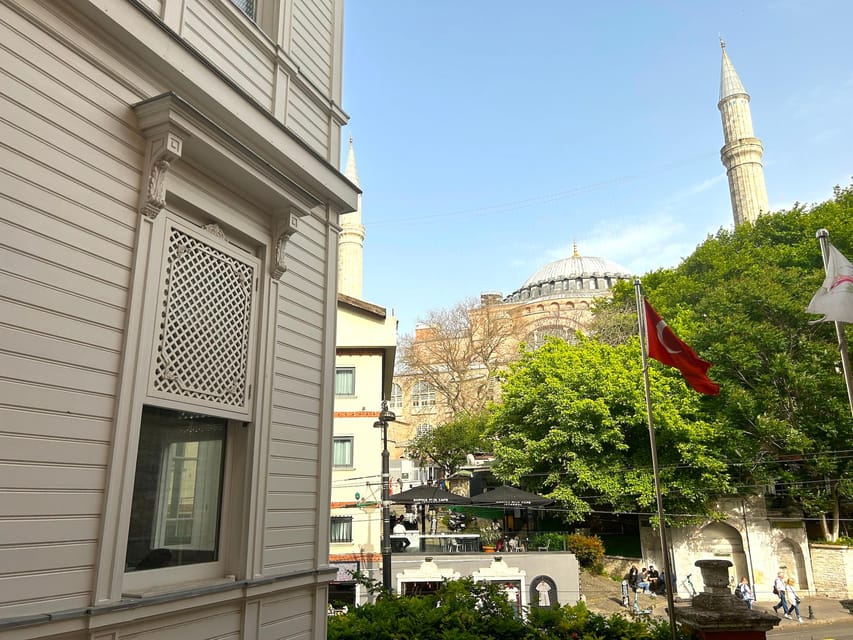
Part of the reason this works for many people is the setting. You are not shuffled into a generic theater. It’s described as taking place in an arts-center style space within a historical house, which helps it feel closer to a genuine ceremony than a staged production.
The space is set up so you can see well from the seats, and the experience includes materials on Sufism and whirling symbolism through the digital guide system. Some guests also mention using QR-based information tools to read about what’s happening, which can be handy if you want more detail without interrupting the ceremony.
There’s also a built-in “respect culture” that you feel immediately. That no-noise policy is not just rules for the sake of rules. It protects the quiet concentration of the ritual. If you’re the kind of person who likes to watch with your full attention, you’ll appreciate how many other visitors do the same.
Price and Value: Is $17 Worth It?
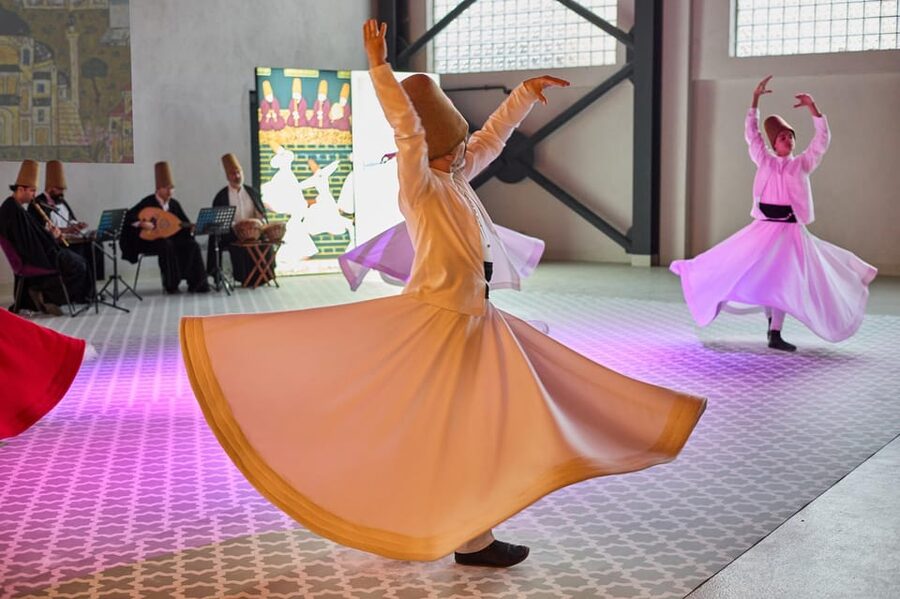
At $17 per person for a 55-minute experience, this is one of the more budget-friendly “culture tickets” you’ll find in Istanbul. That said, value is not just cost. Value is what you get for the money: explanation, live music, a meaningful ritual, and a included drink.
This experience also has a charitable angle. Several guests highlight that ticket income supports scholarships through the arts-center or NGO connected to the venue. Even if you don’t travel with a cause-first mindset, it is comforting to know your ticket supports education rather than only overhead and profit.
The “what you get” checklist is strong:
- Live ceremony and live classic Turkish music
- A licensed host explanation before and after
- Smart audio guide in 7 languages
- Tea or sherbet and water included
- A calm, respectful venue focused on understanding rather than hype
A small caution on value: because the ceremony is intentionally slow and spiritual, it may feel short to people expecting a loud, high-energy show. But that same quality is what makes it memorable.
Who This Ceremony Is For, and Who Might Prefer Something Else
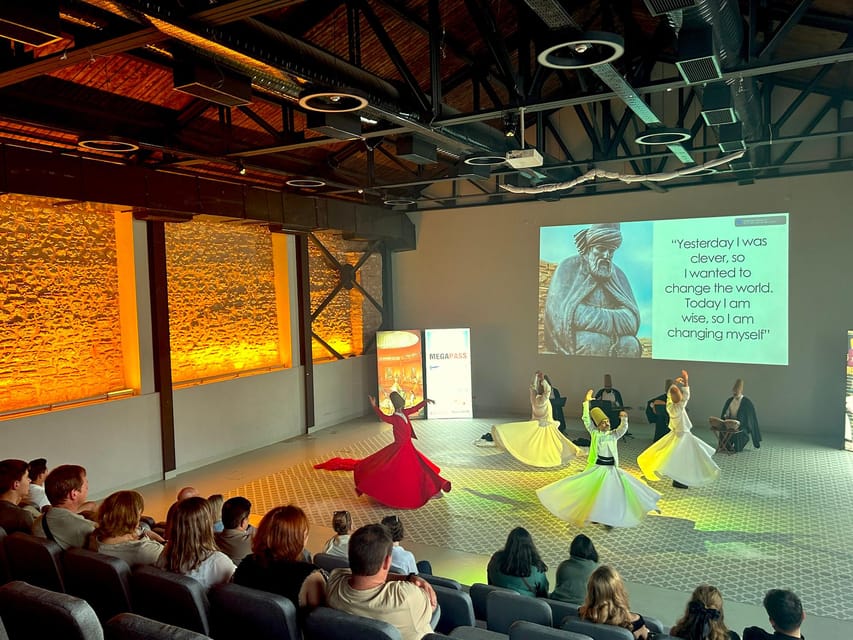
This is best for you if:
- You want a real cultural ritual, not a quick photo stop
- You enjoy spiritual themes, especially Sufism-related concepts
- You like when a guide gives context, not just facts thrown at you
- You can sit quietly for about an hour without needing constant entertainment
It may be less ideal if:
- You need heavy action or loud spectacle to stay interested
- You strongly dislike audio explanations and prefer pure “watch only”
- You get frustrated by slower pacing
Families should also plan around age limits. It is listed as not suitable for children under 2 years. For families with older kids, you might find it depends on temperament, since the setting emphasizes silence.
Practical Tips That Improve Your Experience Fast
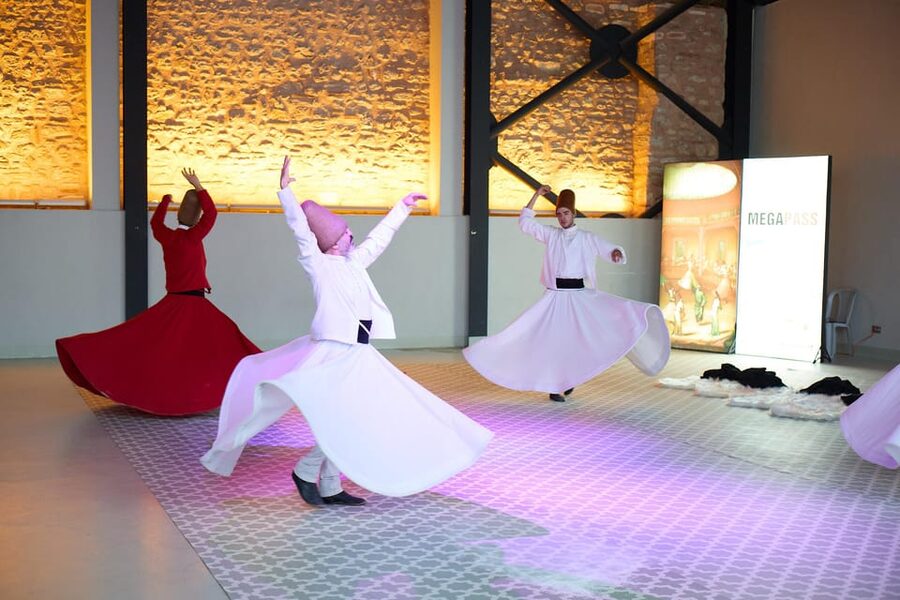
These are the choices that tend to make the ceremony easier to enjoy.
First, treat silence as part of the ticket. Keep your phone away once you’re seated. Even when a guide explains and the audio guide is there for support, the ritual depends on calm.
Second, use the restroom before or after the ceremony. It is specifically recommended, and you do not want to break the quiet rhythm once the dervishes begin.
Third, arrive with your expectations right-sized. This is not meant to be chaotic. It is a ritual with music, turning, and prayers. That’s the point. If you watch it like a meditative performance, you’ll likely feel what people describe as moving and hypnotic.
Finally, if you care about understanding the references, do a tiny pre-read. Rumi, Shams Tabrizi, and the role of the ney flute give you a mental map that makes the symbols land faster.
Should You Book This Whirling Dervish Ceremony Next to Hagia Sophia?
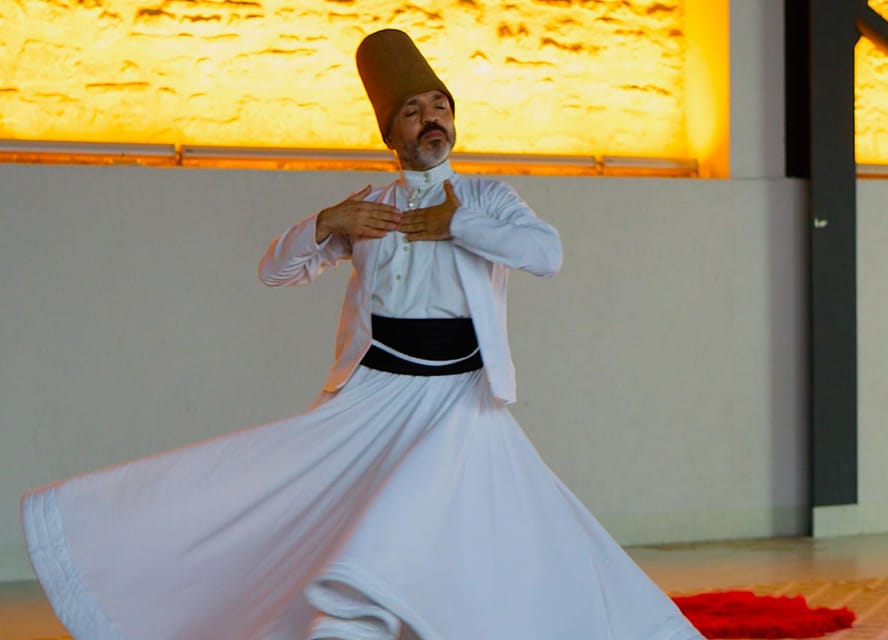
Yes, if you want a calm, meaningful Istanbul experience that blends UNESCO-listed cultural heritage, live classic Turkish music, and real context in multiple languages. The $17 price feels fair for what you get, especially with the included tea or sherbet and the smart audio guide.
I’d pass or look for an alternative if you know you dislike slower religious or spiritual experiences, or if you’re expecting a loud theater-style show. Also consider that the audio at the start can be uneven for some people, so go in patient, settle early, and focus on the live music and the ritual itself.
If you like your Istanbul with both soul and logistics that make sense, this is a strong booking for your evening.
More Old-City Monument Tours in Istanbul
- Istanbul: Hagia Sophia Skip-the-Line Ticket & Museum Option
★ 3.7 · 4,958 reviews - Istanbul: Blue Mosque & Hagia Sophia Guided Tour w/ Tickets
★ 4.8 · 3,600 reviews - Basilica Cistern & Hagia Sophia with Optional Topkapi Palace
★ 4.6 · 3,547 reviews - Istanbul: Hagia Sophia Entry Ticket with Audio Guide
★ 4.3 · 2,854 reviews
Newest Istanbul reviews on the site
- Tour of Byzantine and Constantinople, in istanbul★ 4.5 · 13 reviews
- Tour to Camlica Hill, Camlica Mosque & Camlica Tower★ 4.7 · 9 reviews
- Istanbul: Topkapi Palace Skip-the-Line Ticket & Guided Tour★ 4.2 · 178 reviews
- Istanbul Highlights Small-Group Walking Guided Tour★ 4.4 · 179 reviews
- Topkapi Palace&Harem-Guided Tour-Skip lines- All tickets inc★ 4.8 · 66 reviews
- Topkapi Palace + Basilica Cistern Tickets & Audio Guide★ 4.5 · 30 reviews
- Topkapi Palace Express Tour with Harem Tickets★ 3.8 · 11 reviews
- Sunset Bosphorus Yacht Tour Wiht snacks and live guide.★ 4.9 · 18 reviews
Hagia Sophia & Blue Mosque Tours, compared.
Basilica Cistern Fast-Track Entry and Audio Guide
Read our review →
Hagia Sophia Skip-the-Line Ticket & Museum Option
Read our review →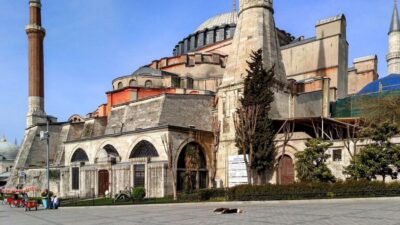
Blue Mosque & Hagia Sophia Guided Tour w/ Tickets
Read our review →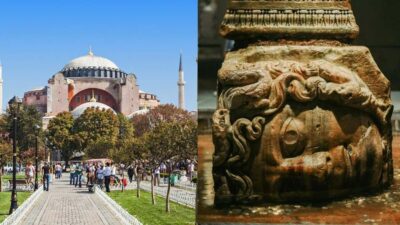
Basilica Cistern & Hagia Sophia with Optional Topkapi Palace
Read our review →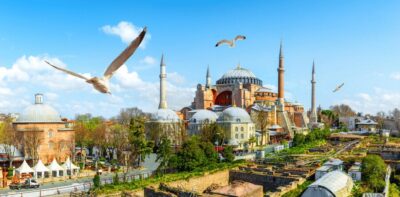
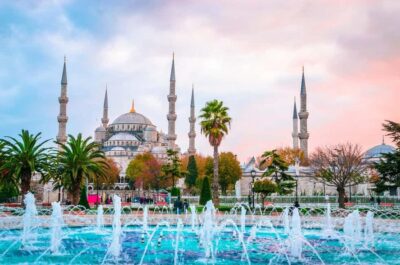
Blue Mosque, Hagia Sophia, & Old Town Walking Tour
Read our review →
Basilica, Hagia Sophia, Blue Mosque Tour & Cruise
Read our review →Browse the lists this tour appears in