REVIEW · EVENING EXPERIENCES
Istanbul Haunted Night Tour
Haunted history feels real here. This Istanbul haunted night tour mixes Roman ruins and Ottoman legends into a focused evening walk, starting at the Column of Constantine and ending at Topkapi’s Imperial Gate. It runs about 2 hours and keeps things hands-on with EMF detectors, an EVP recorder, dowsing rods, and even Maddusa’s Web.
I really like two things about it. First, the route hits big story-spots people skip during daylight plans, like the Hippodrome area and the Sphendone remnants tied to old prison talk. Second, the guides bring an energy that feels fueled by research and storytelling, with names like Sara, Brent, and Mehmet showing up in consistently high ratings.
One possible drawback to keep in mind: this is a themed, spooky-style walk, so if you want a purely scientific or guaranteed paranormal experience, you may end up treating the “haunted” parts as atmosphere and narrative rather than proof.
In This Review
- Quick highlights before you go
- An 8 pm start that turns famous squares into something else
- The ghost-hunting kit: EMF, EVP, and Maddusa’s Web green laser
- Stop 1: The Forum of Constantine and the Column of Constantine’s dark aura
- Stop 2: Ahmet Tevfik Paşa MezarI and the politics of burial
- Stop 3: Sphendone remains and the prison-shaped side of the Hippodrome
- Stop 4: The Hippodrome, chariot factions, executions, and the emperor face-to-face moment
- Stop 5: Kucuk Ayasofya, the Little Hagia Sophia Mosque, and the Justinian-era layer
- Stop 6: Back-side Sphendone, best seats in the house, and the coups above the walls
- Stop 7: The Serpent Column and a spoils-of-war story that turns brutal
- Stop 8: German Fountain, chariot gate origins, and the deadly pay problem
- Stop 9: Sultan Ahmet Tomb and the haunting logic of fratricide
- Stop 10: Sultanahmet Square and the coffee ban with deadly consequences
- Stop 11: Bab-i-Humayun, the Imperial Gate to Topkapi Palace
- Price and value: why about $48 feels fair for this specific combo
- Practical tips so the night goes smoothly
- Should you book this Istanbul haunted night tour?
Quick highlights before you go
- Two-hour night format that works well after dinner, without eating your whole evening
- Hands-on ghost-hunting tools including EMF detectors, dowsing rods, and an EVP recorder
- Sultanahmet and Hippodrome stops tied to real places where power, punishment, and spectacle happened
- English-speaking guides with strong performance energy, often mentioned by name
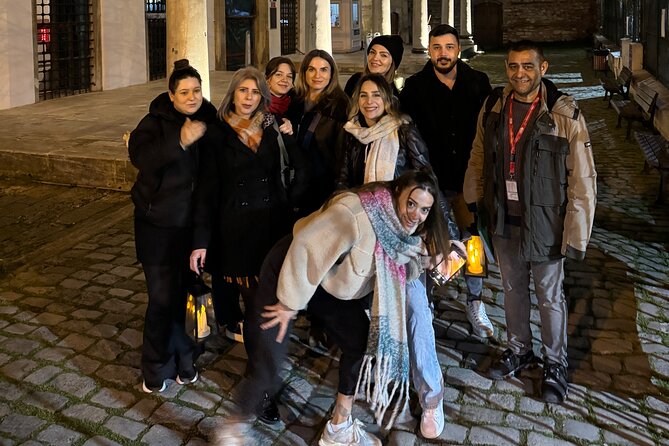
- Small groups of up to 20 so you can actually hear the stories while walking
An 8 pm start that turns famous squares into something else
This tour starts at 8:00 pm, which matters more than you’d think. At night, Sultanahmet feels less like a checklist and more like a lived-in neighborhood. The street noise drops, the lighting changes, and the stone landmarks look different when there are fewer people milling around.
The pace is also built for evening sightseeing. You’re not racing from one distant stop to another all night. Instead, it’s a compact, walkable route across the historic core, moving through Roman and Byzantine Constantinople sites, then into the Ottoman layer that reshaped the area.
There’s another smart detail: the group size is limited to 20, which helps a lot for a story-based tour. You get time to listen at each stop instead of being shoved into the back of the crowd. And because it’s offered in English with a mobile ticket, you can keep your planning simple.
If you’re trying to fit it into a multi-day plan, note that it’s often booked about 15 days in advance. I’d treat that as a hint to reserve early rather than waiting until the last minute.
Other Istanbul outings to compare
- Istanbul: Bosphorus Dinner Cruise & Show with Private Table
★ 4.8 · 62,058 reviews - Istanbul: Daytime or Sunset Sightseeing Cruise & Audio Guide
★ 4.8 · 14,430 reviews - Istanbul: Bosphorus Dinner Cruise & Turkish Night Show
★ 4.8 · 12,954 reviews
The ghost-hunting kit: EMF, EVP, and Maddusa’s Web green laser
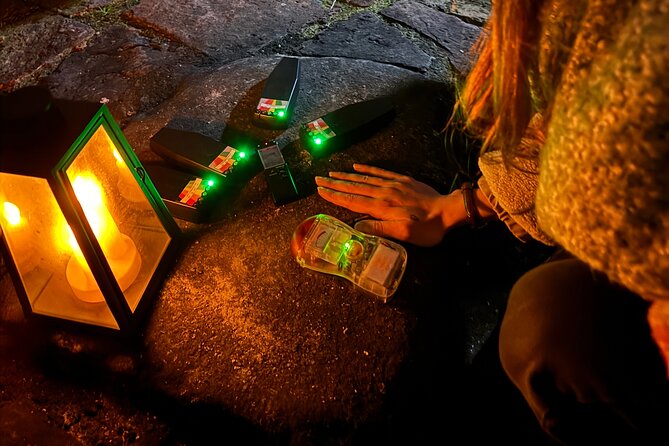
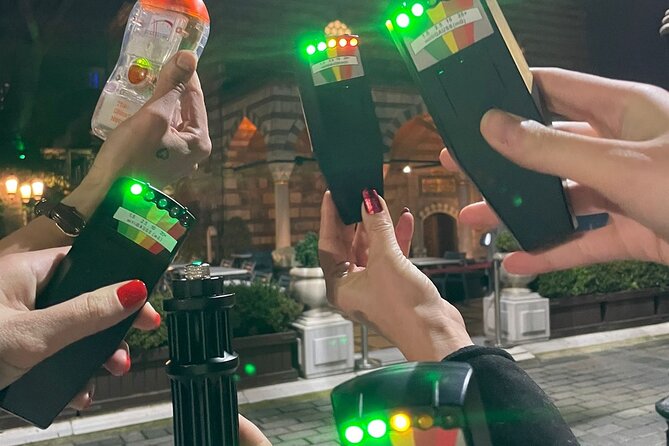
One of the most praised parts of this tour is the equipment. You’re not just standing there while someone talks about spooky things. You’ll have EMF detectors, dowsing rods, a green laser tool called Maddusa’s Web, and an EVP recorder as part of the experience.
What I like about this approach is that it gives you something to do with your hands and your attention. When you’re moving through places associated with fear, executions, and conspiracies, it can help to have a structured way to “participate” instead of only watching.
A practical note: don’t go in expecting the tools to magically confirm supernatural events. Use them as part of the fun and the ritual of the night. Even if the readings are quiet, the process still makes the walk feel more interactive, and it keeps you focused on what the guide is pointing out in the shadows.
Stop 1: The Forum of Constantine and the Column of Constantine’s dark aura
You begin at the Forum of Constantine, a location tied to a huge turning point in the Roman world. In the year 330, Constantine moved the capital of the Roman Empire, and this area became a starting point for that change. That “major-history” fact is the anchor for the spooky angle that comes next.
The story focuses on the Column of Constantine, and the forum area around it. The vibe here works because the setting is already dramatic. Even if you’ve seen photos of the column before, at night it feels more like a landmark you’re passing through on the way to something intense.
This is also a good first stop because it sets expectations. The guide essentially teaches you how to listen for the connections: a place is not just a place, it’s a stage where power shifted.
Stop 2: Ahmet Tevfik Paşa MezarI and the politics of burial
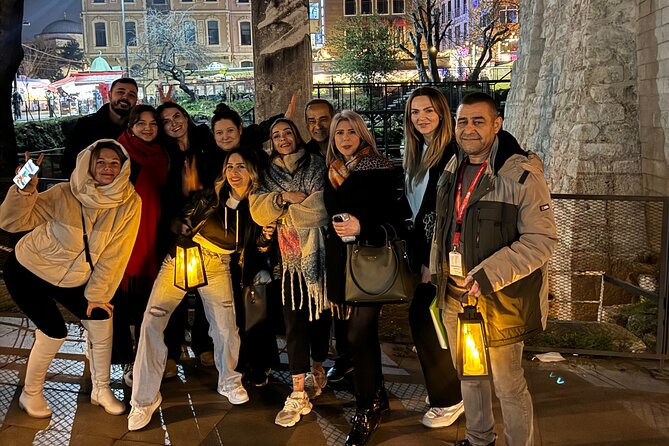
Next comes Ahmet Tevfik Paşa MezarI, described as the graveyard of a Sultan and his advisors from the 19th century. Here, the tone shifts from Roman-era capital drama into later, darker political intrigue.
I like this stop because it gives the tour emotional variety. You’re not only hearing about ancient empires and grand battles. You’re also hearing about betrayal and assassination, the kinds of stories that tend to repeat whenever rulers fear losing control.
The “practical for you” takeaway: take a moment to slow down here. Night walking can make every stop blur together. This is one of the stops where paying attention to the narrative makes the atmosphere click.
Same part of the country, a different kind of day:
- Best of Istanbul 1, 2 or 3-Day Private Guided Istanbul Tour
★ 5.0 · 8,922 reviews - Istanbul: Basilica Cistern Fast-Track Entry and Audio Guide
★ 4.6 · 7,521 reviews - Istanbul: Hagia Sophia Skip-the-Line Ticket & Museum Option
★ 3.7 · 4,958 reviews - Istanbul: Hodjapasha Whirling Dervishes Show & Exhibition
★ 4.4 · 4,790 reviews
Stop 3: Sphendone remains and the prison-shaped side of the Hippodrome
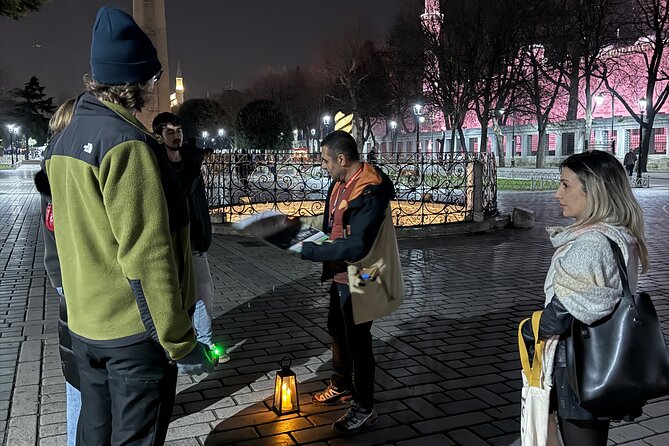
The walk then brings you to the Sphendone remains, specifically the vaulted remnants on the south side of the Hippodrome. This is where the tour leans into “place-based horror,” meaning the physical structure helps explain the story.
You’ll hear about an ancient prison that once held wild animals for circus performances. Then the discussion turns to torture methods and how disfiguration was used. That’s heavy material, but it helps explain why the guide’s language can feel so direct in this part of the route.
Why this is valuable: it connects the Hippodrome idea of spectacle to something more brutal than chariot racing. If you only know the Hippodrome as a “fun ancient stadium,” this stop reframes it as a system of punishment and control.
Stop 4: The Hippodrome, chariot factions, executions, and the emperor face-to-face moment
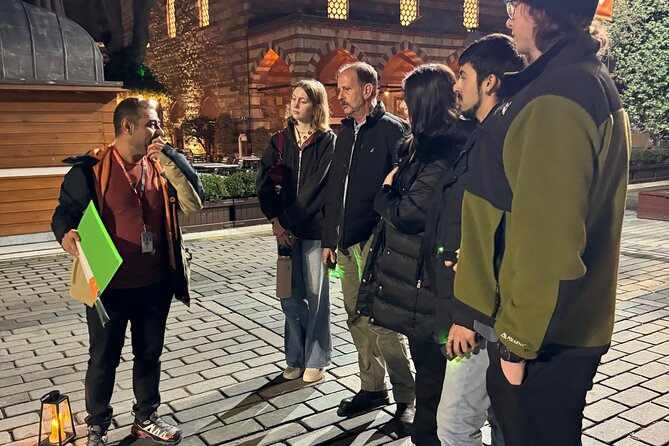
The Hippodrome stop is the main stage. It was the sporting and social center of Constantinople for over 1000 years, and the tour points out that it was second only to the Circus Maximus. You hear about chariot races, rival factions, and the emperor appearing for citizens.
But the most important part for me is how the guide ties sport to public punishment. The Hippodrome area also hosted public executions, and it became the scene of one of the most horrific massacres in human history.
If you’re the type who likes context, this stop is a win because it shows how public space worked in past empires. People gathered for entertainment, but the same arena also enforced authority through fear.
Stop 5: Kucuk Ayasofya, the Little Hagia Sophia Mosque, and the Justinian-era layer
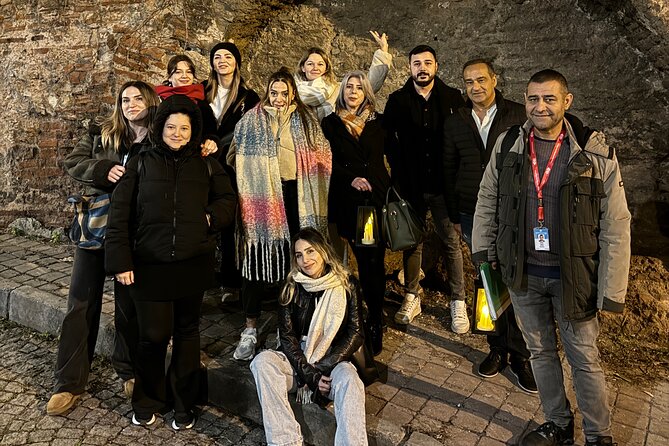
At Kucuk Ayasofya, also known under Ottoman rule as the Little Hagia Sophia Mosque, the tour starts stacking timelines. The area was once the Church of Saints Sergius and Baccus, and the site’s story includes a palace connection: it was home to Justinian before he became emperor in the 6th century.
Then comes the darker anecdote from the 16th century, about a high-ranking eunuch embezzling money and evading taxes, getting found and executed. The tour also notes that admission here is included, which helps you focus on the stop instead of handling extra ticket decisions.
I like this stop because it’s not only about “what happened,” it’s about how Istanbul layers religions, buildings, and power. You’re seeing how one place can carry multiple identities, even while the stories keep circling back to control and consequence.
Stop 6: Back-side Sphendone, best seats in the house, and the coups above the walls
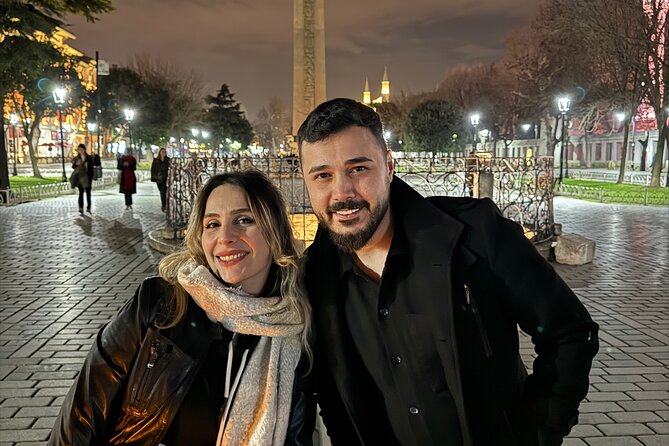
You return to Sphendone remains, this time approaching the back side, and the story centers on the idea of the best seats in the house. In other words, the best sightlines were also tied to the worst events.
Here the talk covers death across many centuries and includes a coup d’état where an emperor was dethroned successfully, followed by the fate of the emperor and his sons above these walls.
This stop works especially well after Kucuk Ayasofya because your brain is primed for overlap. Ancient and Ottoman stories start to feel like two pages of the same book, not separate folders. If you’re paying attention, you’ll notice how often power struggles and public spectacle show up together.
Stop 7: The Serpent Column and a spoils-of-war story that turns brutal
The tour then moves to the Serpent Column, where it focuses on a “haunted” angle linked to spoils of war and a brutal execution of a Byzantine emperor.
The Serpent Column is one of those landmarks that feels symbolic even before a guide speaks. The added storytelling makes it more than a photo stop. It turns it into a clue: war brings objects, objects become monuments, and monuments end up holding memories people still whisper about.
If you like when a tour makes you look at a familiar-looking structure from a new angle, this is one of your payoff stops.
Stop 8: German Fountain, chariot gate origins, and the deadly pay problem
Next is the German Fountain. The tour notes that the same location once served as the starting gates for the chariot races in the Hippodrome. That’s a nice connection because it keeps the theme consistent: this isn’t random ghost lore. It ties back to the stadium’s real function.
Then the story jumps to the 17th century, when Ottoman soldiers returning from war were not being paid, leading to a deadly event at this location where an old tree once stood.
I like this stop because it’s grounded. It shows how everyday conditions, like unpaid wages, can trigger catastrophe. That kind of realism tends to make the spooky tone feel less like fantasy and more like “human nature, repeated.”
Stop 9: Sultan Ahmet Tomb and the haunting logic of fratricide
At the Sultan Ahmet Tomb, the tour leans into Ottoman succession violence. It mentions the law of fratricide, allowing Sultans to kill brothers and even children who threatened the throne. The tour frames the haunting as tied to those buried bodies and the choices that preserved power.
This is a heavy stop, and the value is in understanding why the stories keep sticking around. When a system rewards ruthless preemption, it creates moral shadows that can feel hard to walk past.
If you’re sensitive to violent historical topics, just note that this tour does not sanitize the dark side of past empires.
Stop 10: Sultanahmet Square and the coffee ban with deadly consequences
The tour’s next move is Sultanahmet Square, where it covers an early 17th century story: coffee was banned for public drinking, and the consequences were literally deadly.
It’s an unusual detail, and that’s why it works. People expect towers and temples. A ban on coffee feels almost too human, which can make the whole spooky-night tone more believable. It also gives you a break from the nonstop war and execution themes for a minute.
If you want a tour that mixes well-known monuments with surprising social history, this stop delivers.
Stop 11: Bab-i-Humayun, the Imperial Gate to Topkapi Palace
The walk concludes at Bab-i-Humayun, the Imperial Gate of the palace complex. The guide frames it as grand but intimidating, meant to scare and control people entering the imperial space.
One more story is tied to the palace grounds: the head gardener reportedly had a special race that was a matter of life and death.
That ending is a strong close because it snaps you back into the Ottoman theme of power. You finish in the exact doorway-style space where rulers displayed authority, not only in documents but in architecture and ritual.
Even if you don’t care about ghost lore, this final stop helps you feel what “imperial intimidation” looks like when it’s built into stone.
Price and value: why about $48 feels fair for this specific combo
At about $48.06 per person for roughly 2 hours, you’re paying for a tight mix: a guided, English-speaking night walk through highly specific sites, plus equipment that helps you participate, and a route that stays centered around major historic landmarks.
This is not the kind of tour that feels like you’re just buying access. You’re buying a narrative structure: each stop connects to the next through themes of power, punishment, and spectacle.
The value also comes from group size. A max of 20 means your money tends to buy a better listening experience than the big-bus style tours. And since the tour includes a church/mosque stop with admission listed as included at Kucuk Ayasofya, you avoid some small add-on costs.
Practical tips so the night goes smoothly
- Wear shoes you can trust on uneven stone. This is a walking tour, and Istanbul’s historic areas can be slick at night.
- Bring a light layer. Evening air can shift fast in summer and spring, and you’ll be outside for the full 2 hours.
- Plan for a little weather sensitivity. The tour is described as requiring good weather, and if it gets canceled due to poor weather, you’re offered a different date or a refund.
- Arrive a few minutes early at the start point, the Column of Constantine address near Molla Fenari and Vezirhan Cd. That helps you get your bearings fast before the first story.
Should you book this Istanbul haunted night tour?
Book it if you want a night-focused walk through Sultanahmet and the Hippodrome area, and you like tours that blend spooky atmosphere with real historical anchors. It’s especially worth your time if you enjoy interactive touches, since the EMF, EVP, dowsing rods, and Maddusa’s Web tools keep you engaged.
Skip or consider a different style if you want a strictly calm, daytime museum vibe, or if you’re uncomfortable with stories that include executions, torture talk, fratricide, and deadly punishments. The tour leans into dark themes, and it doesn’t pretend history was gentle.
If you want one good reason to choose it: you’ll leave with a clearer sense of how Istanbul’s Roman and Ottoman power dramas played out in the exact streets and stones you can still stand beside today.
Newest Istanbul reviews on the site
- istanbul airport transfer★ 3.5 · 43 reviews
- Cappadocia best one day tour Including flight tickets★ 5.0 · 17 reviews
- Food Tour in Istanbul with Local Guide★ 5.0 · 37 reviews
- Istanbul Private Guiding Service★ 5.0 · 68 reviews
- Istanbul Private Tour (Licensed Guide)★ 5.0 · 17 reviews
- Best Istanbul tour with private guide by skipping ticket line★ 5.0 · 103 reviews
- Istanbul Airport (IST) To Hotels Transfer★ 5.0 · 80 reviews
- Best Of İstanbul Europe Side In One Day★ 5.0 · 10 reviews
Evening Experiences, compared.
Daytime or Sunset Sightseeing Cruise & Audio Guide
Read our review →
Bosphorus Dinner Cruise & Turkish Night Show
Read our review →
Istanbul Bosphorus Sunset Cruise on Luxury Yacht
Read our review →
Sunset or Day Small-Group Yacht Cruise with Snacks
Read our review →

Bosphorus Sunset Cruise on Yacht with Live Guide
Read our review →