
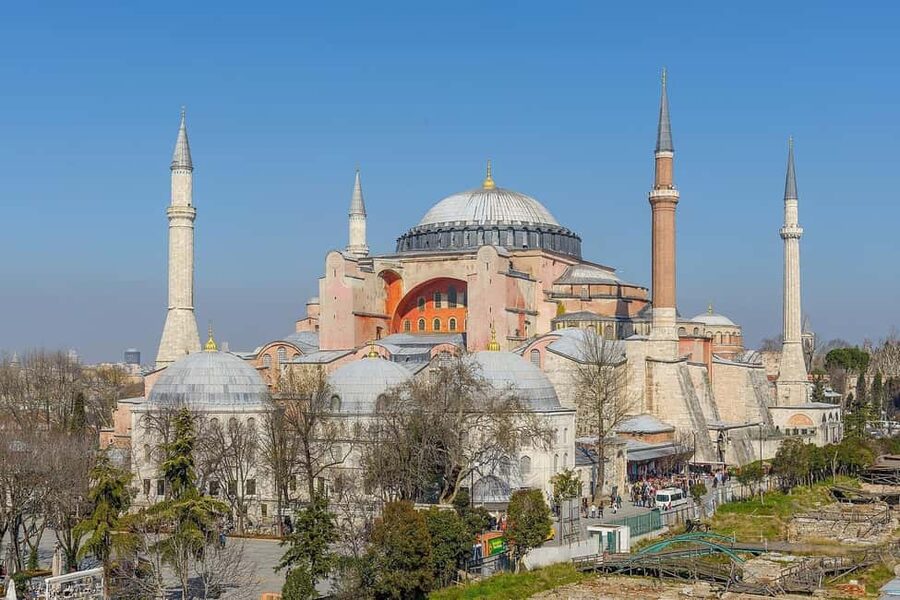
REVIEW · HAGIA SOPHIA & BLUE MOSQUE TOURS
Istanbul: Hagia Sophia, Blue Mosque Guided Tour, & Tickets
Three monuments, one unforgettable morning. This guided walking route connects Hagia Sophia, the Blue Mosque, and the Hippodrome, so the big landmarks finally make sense as a single story. I especially like how guides such as Onur and Gamze guide your eyes to what matters, not just what is famous.
I love the way this tour pairs architecture with real context. Hagia Sophia gets treated like a time machine, from its Orthodox Christian roots and Roman emperor ceremonies to its later role as a mosque, all while you’re standing under the famous dome. Then the Blue Mosque shifts the mood with Iznik tilework and Ottoman naming traditions you can actually picture in your head.
One consideration: you do not get a guaranteed skip at the sites themselves. The tour notes that Hagia Sophia and the Blue Mosque may still involve security waits, and in peak times the line can be about 45 minutes, even though the guide keeps you moving with stories and timing.
In This Review
- Key takeaways
- Sultanahmet in 2.5 hours, where the guide does the work
- Hagia Sophia: the dome, the dual-faith story, and why emperors cared
- What can feel rushed here
- Blue Mosque (Sultanahmet Mosque): Iznik tilework and Ottoman naming that sticks
- Timing note for the mosque interior
- Hippodrome Square and the Obelisk of Theodosius: fast but meaningful
- Tickets, queues, and what the tour can realistically control
- Dress code, bag rules, and how to avoid the common stop-and-go moments
- A small comfort that adds up
- Price check: why $59 can be good value for a guided landmark sprint
- Who should book this Hagia Sophia and Blue Mosque guided tour
- Should you book? My honest take
- FAQ
- What is included in the tour?
- How long is the experience?
- Where do I meet the guide?
- Are tickets or skip-the-line access guaranteed?
- What should I wear or bring?
- Is flash photography allowed?
- Is the tour suitable for wheelchair users or medical conditions?
- Can children join for free?
Key takeaways
- Hagia Sophia first, with a clear, guided walk through the building’s layered religious and political past.
- Blue Mosque tiles made understandable, including why the interior looks the way it does and where the designs come from.
- Hippodrome photo stop with specifics, including the Obelisk of Theodosius, a 4th-century Egyptian relic.
- English-speaking guide in a small-group feel, so questions are welcome and the pacing stays human.
- Dress and bag rules matter, since you are entering active worship spaces, not just sightseeing stops.
Sultanahmet in 2.5 hours, where the guide does the work
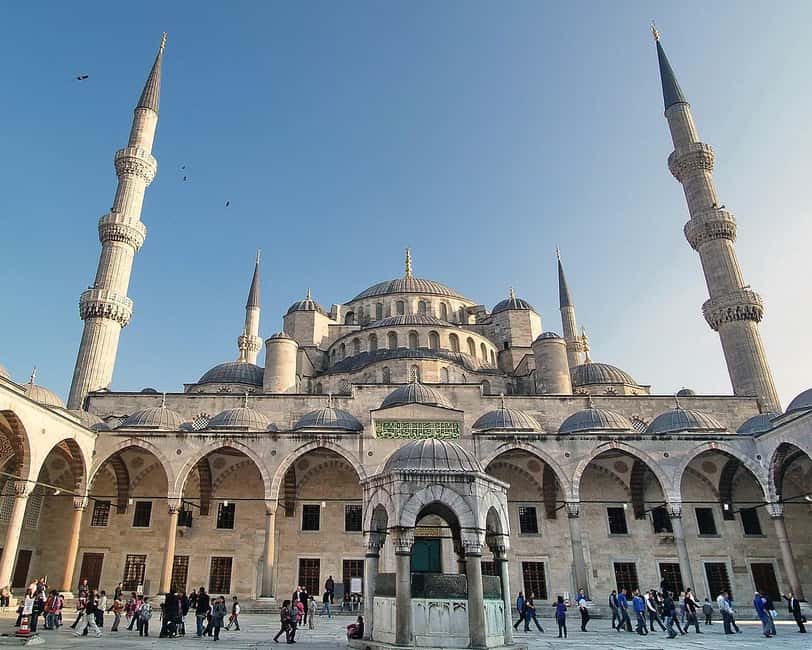
This is a tight, focused morning or afternoon loop in Istanbul’s old core. You start at the Double Decker Sightseeing Tourist Bus Stop across Hagia Sophia, where your guide holds a white flag with the Istanbul E-pass logo, so you are not stuck playing locate-the-flag at the worst possible moment.
The time budget is sensible: 1 hour inside Hagia Sophia, 45 minutes at the Sultanahmet Mosque (the Blue Mosque), then about 30 minutes at the Hippodrome of Constantinople for photos and walking. That pacing is ideal if you want to see the top monuments without turning the day into a sprint through lines and long hallways.
Small-group walking matters here. Reviews repeatedly point to guides adjusting the flow, keeping people together, and using shade when Istanbul weather gets pushy. If you prefer to understand what you are looking at instead of simply photographing it, this format fits.
More old-city monument tours in Istanbul:
- Istanbul: Basilica Cistern Fast-Track Entry and Audio Guide
★ 4.6 · 7,521 reviews - Istanbul: Hagia Sophia Skip-the-Line Ticket & Museum Option
★ 3.7 · 4,958 reviews - Istanbul: Blue Mosque & Hagia Sophia Guided Tour w/ Tickets
★ 4.8 · 3,600 reviews
Hagia Sophia: the dome, the dual-faith story, and why emperors cared
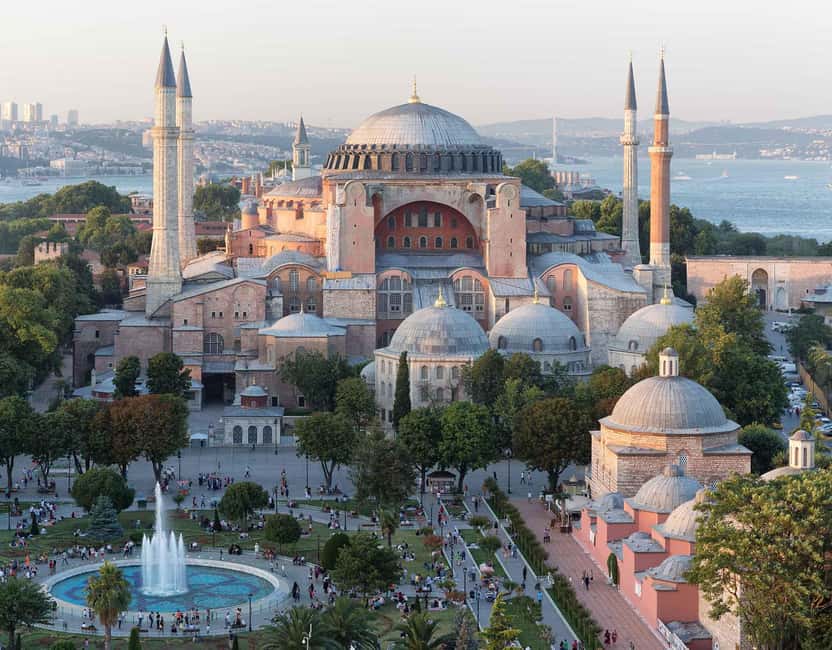
Hagia Sophia is the headliner, and the tour treats it like one. You get around an hour inside with a guide who ties together the building’s timeline, including how it served as the headquarter of Orthodox Christendom and later became the first mosque in Istanbul after the conquest.
What I like is how the guide frames what you are seeing in the physical space. Hagia Sophia went up in about five years, and the dome dimensions are the kind of fact that changes how you look at the ceiling. It is described as roughly 55.6 meters high and 31.9 meters in diameter, with that massive scale holding the record for about 800 years.
The tour also leans into the side-by-side story inside the building. You hear about depictions of the religions existing within the same structure, and you connect that to the building’s later use after the Ottoman period. It is not presented as a trivia dump, it is presented as a reason the building feels both familiar and strange at the same time.
You also get political context, and that helps a lot. Hagia Sophia is described as a coronation place for Roman emperors, plus a meeting spot where the sultan and his people could connect. When you understand that it was a stage for power as well as worship, the scale clicks.
What can feel rushed here
One drawback of a timed tour is that you cannot linger forever in the corners that catch your eye. If you like to study mosaics and inscriptions slowly, you may want a bit more time than the allotted hour. The guide can guide you to the best features quickly, but your depth will depend on your pace and your interests.
Blue Mosque (Sultanahmet Mosque): Iznik tilework and Ottoman naming that sticks
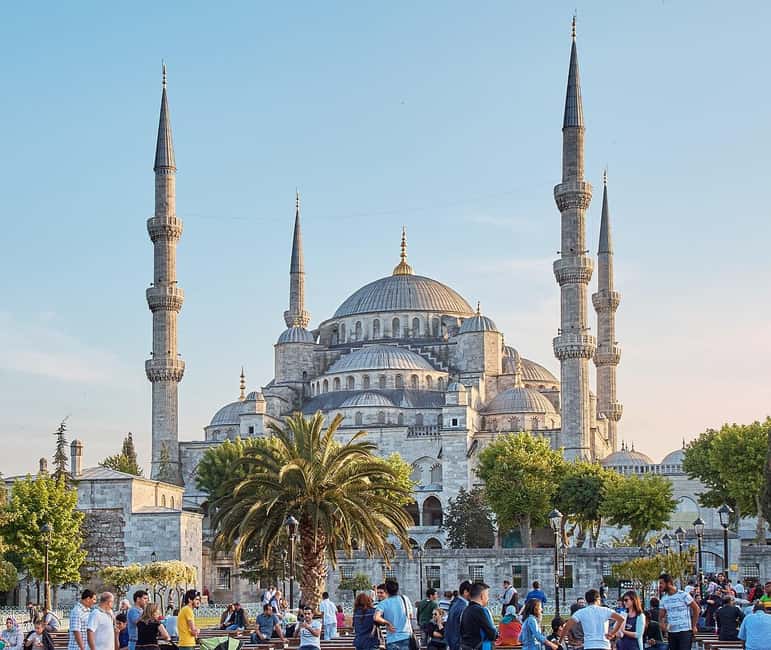
After Hagia Sophia, the tour moves you to the Sultanahmet Mosque, better known as the Blue Mosque. The contrast is dramatic, and the guide helps you understand why the interior is so visually distinctive.
The key detail here is the tiles. The tour explains that the Blue Mosque is named for the color tones that come from its interior tilework, and that these tiles are associated with Iznik, Turkey’s famous tile-producing city. Once you know that, it is easier to look past the first impression and actually notice patterns, placement, and how the space is designed to pull your gaze.
I also like the way the tour covers how Ottoman tradition shaped mosque names. The tour shares a simple rule: mosques were often named based on order and funding, which means many carry the names of the people who commissioned and paid for them. It also notes a regional naming habit tied to who built the biggest mosque in an area.
That naming context might sound small, but it helps in Istanbul. You start recognizing the logic behind names that otherwise feel like random labels. It is a nice way to keep your brain engaged while you are walking through a place that can get crowded.
Other Istanbul outings to compare
- Istanbul: Bosphorus Dinner Cruise & Show with Private Table
★ 4.8 · 62,058 reviews - Istanbul: Daytime or Sunset Sightseeing Cruise & Audio Guide
★ 4.8 · 14,430 reviews - Istanbul: Bosphorus Dinner Cruise & Turkish Night Show
★ 4.8 · 12,954 reviews - Best of Istanbul 1, 2 or 3-Day Private Guided Istanbul Tour
★ 5.0 · 8,922 reviews
Timing note for the mosque interior
The guide portion is about 45 minutes. That is usually enough to see the most important views and understand the design, but it may not satisfy if you want extended quiet time in worship areas. Also, this is an active mosque, so your route and photo opportunities can shift based on what is happening on the day.
Hippodrome Square and the Obelisk of Theodosius: fast but meaningful
The Hippodrome of Constantinople is not always the first thing people think of, but it belongs in this circuit. The tour stops in what is now Sultanahmet Square, where the ancient arena once hosted chariot races and public gatherings.
The tour frames it in Roman and Byzantine terms. It was originally built in the 3rd century CE by Emperor Septimius Severus, then expanded in the 4th century by Emperor Constantine the Great. Once you have that timeline in your head, the square stops looking like an empty open area and starts looking like the leftover bones of a huge civic stage.
The highlight stop is the Obelisk of Theodosius, a towering Egyptian relic brought in during the 4th century. The guide uses this to connect geography, power, and spectacle. Even if you just take a few photos, you come away with the idea that Constantinople was built for crowds, noise, and ceremony, not just palaces.
The itinerary gives you about 30 minutes here for a photo stop and a walk. That is short, but it is a smart way to end the loop by anchoring the day with a landmark outside the walls of the two major worship spaces.
Tickets, queues, and what the tour can realistically control
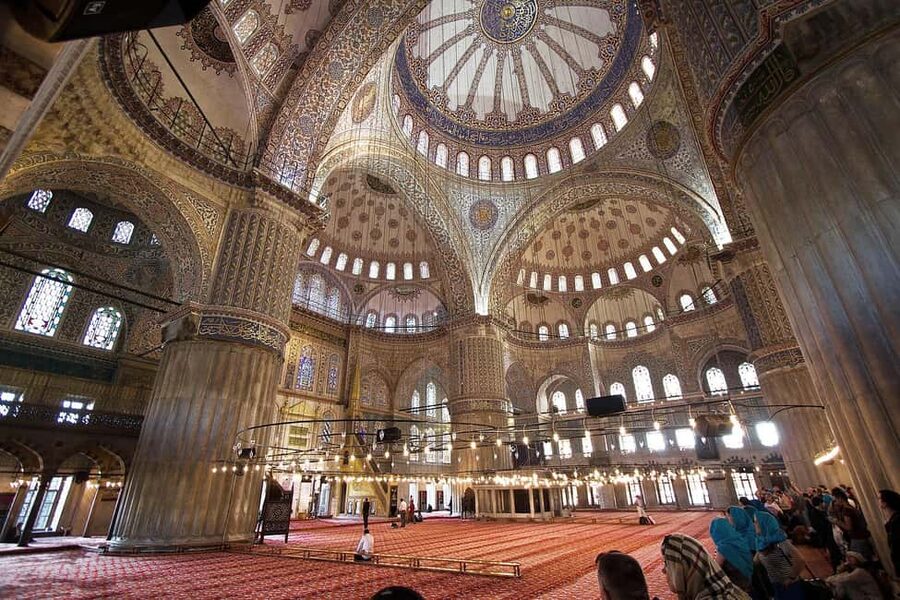
This tour includes entrance ticket access to Hagia Sophia, and it is set up so you are not dealing with every decision on your own while you are in the tightest part of the city. The guide is also part of the value, because the main sites require security checks and timing.
Here is the important truth you should plan around: the tour states that a skip-the-lines service is not offered at Hagia Sophia and the Blue Mosque. In peak season, security lines can take around 45 minutes. That means you should treat the tour as line-management support plus storytelling, not as a promise of instant entry.
That said, the experience often feels smooth in practice. Multiple guide reports point to adaptive pacing, with guides reordering the flow to reduce hassle when crowds pile up. If you are flexible, and if you go with the guide’s plan, you usually end up spending your time seeing rather than waiting.
If your visit is on a busy day, a guide-led schedule matters more than you think. When you are stuck in a long security queue, a guide who keeps you engaged changes the whole mood of the tour. Reviews repeatedly describe guides filling those waiting stretches with architecture and history details, plus pointers for what to look for inside.
Dress code, bag rules, and how to avoid the common stop-and-go moments
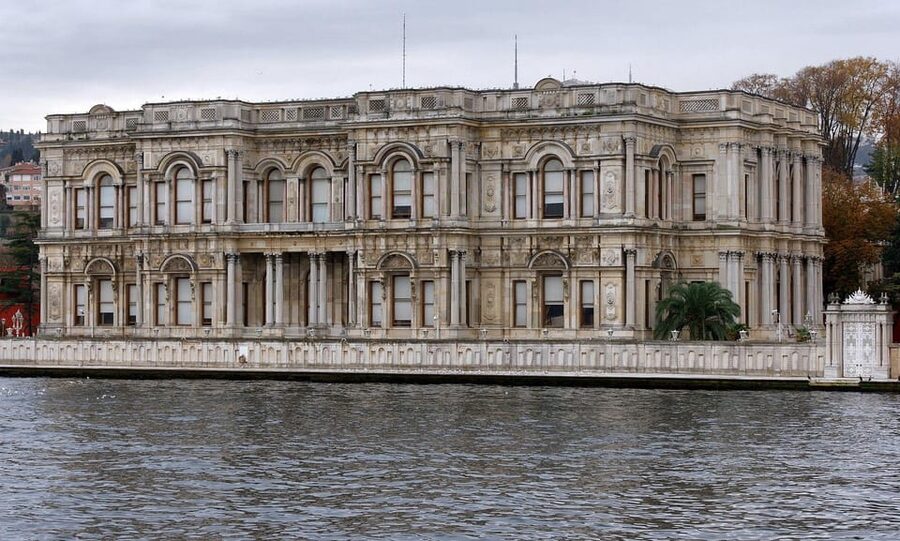
You are visiting active worship spaces, so you need to plan clothing and bags like a checklist. Bring comfortable shoes because this is a walking tour in an area where cobblestones and crowds slow you down. Bring a headscarf because it is required for entry.
Then watch the restrictions so you do not lose time at checkpoints:
- No shorts
- No short skirts
- No oversize luggage
- No baby strollers
- No luggage or large bags
- No backpacks
- No flash photography
These rules can be strict. You will save yourself stress by traveling light and dressing for the mosques from the start.
One practical benefit is that guides sometimes help when you forget something. Reviews mention support for covering up exposed shoulders, even for a fee, which can rescue you if you realize too late that your outfit does not match the requirements.
A small comfort that adds up
You will also benefit if your guide works the pace for the conditions. Some guides are described as choosing shaded spots during explanations, which makes a hot day much more tolerable. In Istanbul, comfort is not a luxury, it is what keeps your attention on the story.
Price check: why $59 can be good value for a guided landmark sprint
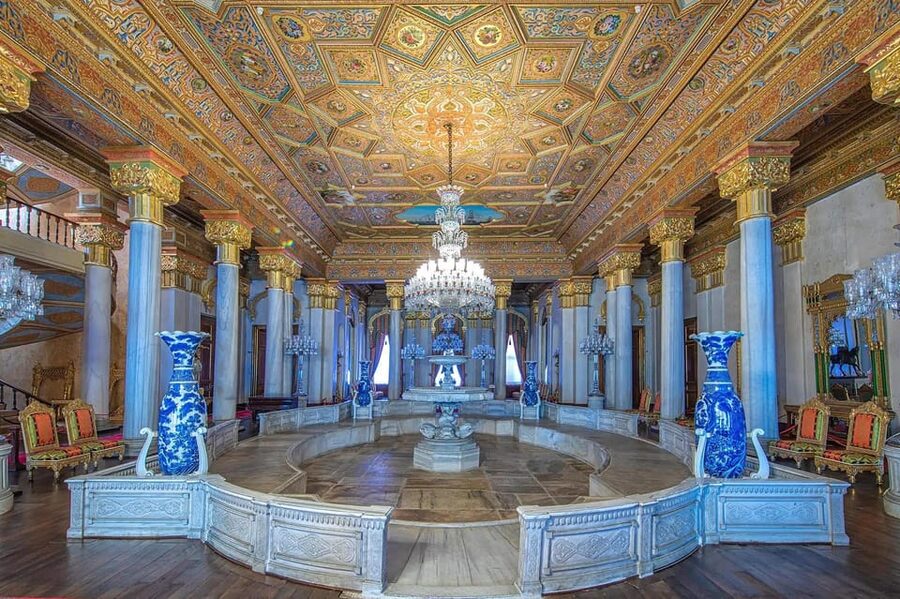
At $59 per person for about 2.5 hours, this tour sits in the sweet spot between a DIY walk and a long full-day commitment. You get a structured path through the three big stops, plus the guide’s context so you understand what you are seeing the moment you see it.
The value comes from three parts:
- The time structure keeps you from spending your whole day figuring out entrances and priorities.
- The guided story makes Hagia Sophia and the Blue Mosque more than photo backgrounds.
- The guide’s group pacing helps when security lines and crowd flow change minute to minute.
You should still hold realistic expectations about line time. Because security waits can be significant at the main sites, the tour is not a magic fast-track ticket. But for many people, the guide’s ability to manage the flow and explain what you are waiting for turns the wait into part of the experience instead of pure frustration.
The other value point is the focus. You cover Hagia Sophia, the Blue Mosque, and the Hippodrome in one connected loop. If your Istanbul schedule is tight, this “greatest hits in one go” approach is hard to beat.
Who should book this Hagia Sophia and Blue Mosque guided tour
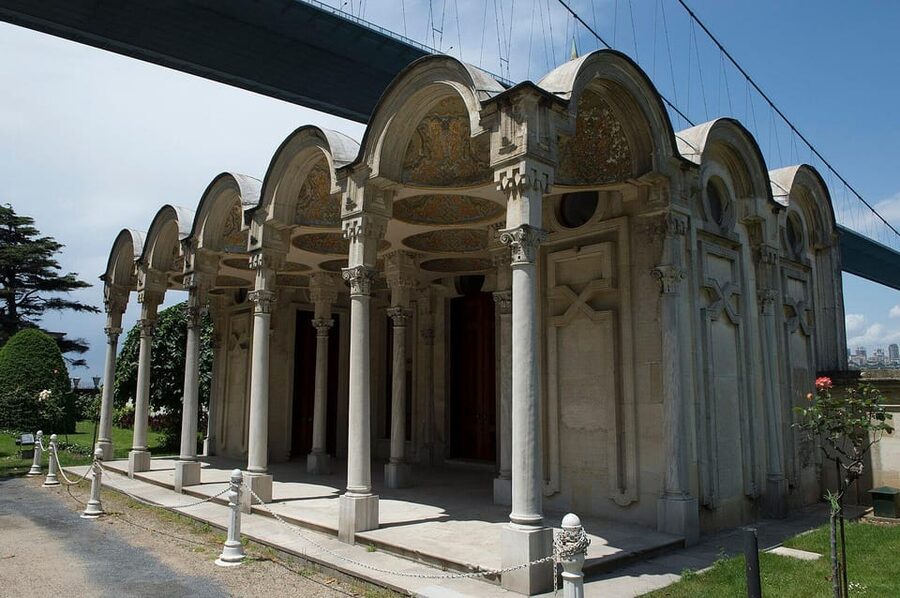
This tour is best for you if you:
- Want the core Istanbul landmarks in one morning or afternoon
- Prefer a guided explanation rather than walking through confusing rooms with a map app
- Like architecture and want the story connected to what you are actually looking at
- Are comfortable walking and standing for short stretches inside busy sites
It may not be the right fit if you need wheelchair access. The tour notes it is not suitable for wheelchair users, and it also says it is not suitable for people with pre-existing medical conditions. Since the walking pace and standing time can vary, err on the cautious side.
Should you book? My honest take
If you have limited time in Istanbul and you want your first visit to Sultanahmet to land with meaning, I think this tour is a strong choice. The combo of Hagia Sophia plus the Blue Mosque, then a grounded stop at the Hippodrome, creates a logical, memorable route without dragging into an all-day marathon.
Book it if you care about context, and book it early in your trip if you want Istanbul’s old-city logic to click fast. Skip it, or pair it with extra solo time, if you need a super slow visit inside Hagia Sophia and the Blue Mosque, or if you are very sensitive to security waiting times.
FAQ
What is included in the tour?
The tour includes an English-speaking professional guide, a visit with Hagia Sophia, Sultan Ahmed Mosque (Blue Mosque), and the Hippodrome, plus entrance ticket access to Hagia Sophia.
How long is the experience?
The duration is about 2.5 hours.
Where do I meet the guide?
Meet at the Double Decker Sightseeing Tourist Bus Stop across from Hagia Sophia, where the guide will be holding a white flag with the Istanbul E-pass logo.
Are tickets or skip-the-line access guaranteed?
The tour states that skip-the-lines service is not offered at Hagia Sophia and the Blue Mosque. Security lines can still take around 45 minutes in peak season.
What should I wear or bring?
Bring comfortable shoes and a headscarf. Dress requirements also include no shorts and no short skirts.
Is flash photography allowed?
No. Flash photography is not allowed.
Is the tour suitable for wheelchair users or medical conditions?
No. The tour is not suitable for wheelchair users, and it is also listed as not suitable for people with pre-existing medical conditions.
Can children join for free?
Children under 8 years old receive free admission, but proof of age must be presented at the entrance.
Newest Istanbul reviews on the site
- Tour of Byzantine and Constantinople, in istanbul★ 4.5 · 13 reviews
- Tour to Camlica Hill, Camlica Mosque & Camlica Tower★ 4.7 · 9 reviews
- Topkapi Palace&Harem-Guided Tour-Skip lines- All tickets inc★ 4.8 · 66 reviews
- Istanbul: Topkapi Palace Skip-the-Line Ticket & Guided Tour★ 4.2 · 178 reviews
- Istanbul Highlights Small-Group Walking Guided Tour★ 4.4 · 179 reviews
- Topkapi Palace + Basilica Cistern Tickets & Audio Guide★ 4.5 · 30 reviews
- Topkapi Palace Express Tour with Harem Tickets★ 3.8 · 11 reviews
- Sunset Bosphorus Yacht Tour Wiht snacks and live guide.★ 4.9 · 18 reviews
Hagia Sophia & Blue Mosque Tours, compared.
Basilica Cistern Fast-Track Entry and Audio Guide
Read our review →
Hagia Sophia Skip-the-Line Ticket & Museum Option
Read our review →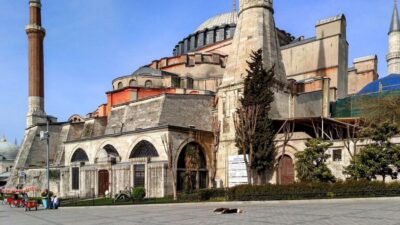
Blue Mosque & Hagia Sophia Guided Tour w/ Tickets
Read our review →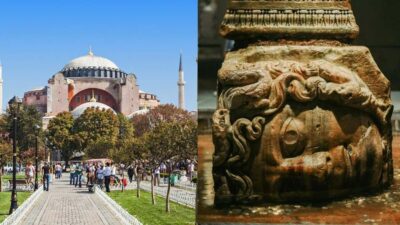
Basilica Cistern & Hagia Sophia with Optional Topkapi Palace
Read our review →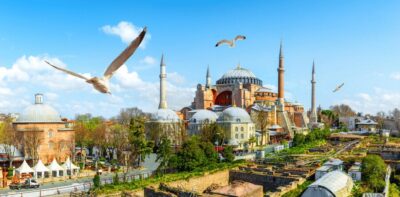
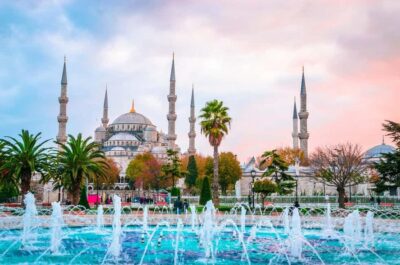
Blue Mosque, Hagia Sophia, & Old Town Walking Tour
Read our review →
Basilica, Hagia Sophia, Blue Mosque Tour & Cruise
Read our review →Browse the lists this tour appears in