REVIEW · ISTANBUL TOURS
Authentic Turkish Antioch Breakfast with Local Sisters
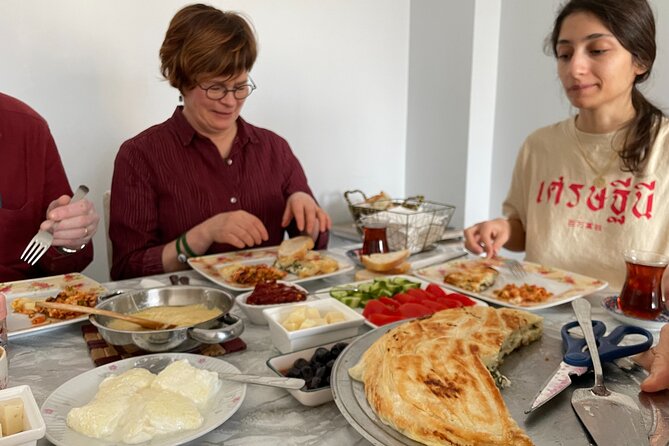
Turkish breakfast hits different when it is homemade. This small Istanbul cooking experience brings you into a local home for a hands-on morning meal, from menemen to muhlama (kuymak).
I love that the focus stays on the food, but you also get real conversation and culture at the table, not a script.
My other favorite part is the menu itself: hot dishes like eggs with sucuk, plus comforting cheese and finishing touches like kaymak with honey. You end the class knowing how each component fits together.
One possible drawback: it is a 2.5-hour experience, so if you are looking for a big sight-seeing day, this is not that. Come hungry, and plan your timing accordingly.
In This Review
- Key Highlights
- A Home Kitchen in Sarıyer: What You Are Really Paying For
- The Turkish Breakfast Menu, Explained Simply
- Simit at the Start: Getting Your Bearings for the Meal
- Menemen: The Egg-and-Vegetable Technique You Will Actually Use
- Muhlama (Kuymak): Comfort Food That Teaches Patience
- Eggs with Sucuk and the Art of a Bold Breakfast Plate
- Kaymak and Honey: Finish Like a Turkish Morning
- The Small-Group Advantage: More Cooking, More Conversation
- Where This Happens, and How the Timing Feels
- Value Check: Does $65 Buy Real Usefulness?
- Practical Tips Before You Go
- Should You Book This Turkish Antioch Breakfast Class?
- FAQ
- How long is the Turkish Antioch breakfast experience?
- How much does it cost?
- What language is the class offered in?
- How many people are in each group?
- Where do I meet and when does it start?
- Is free cancellation available?
Key Highlights
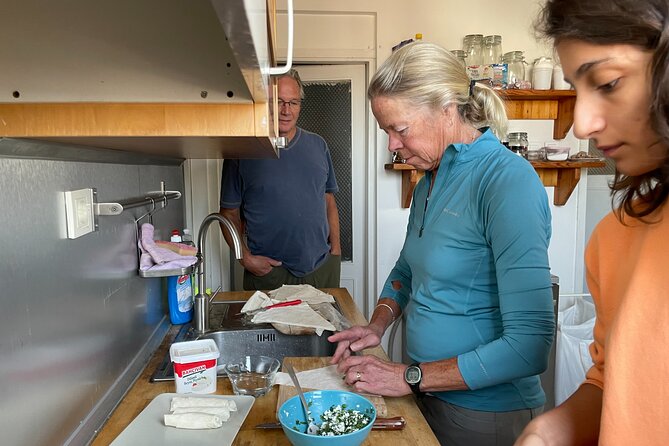
- Small group of up to 6 means more attention while you cook
- Local sisters host you at home, so it feels personal, not staged
- Hands-on breakfast classics like menemen, muhlama (kuymak), and eggs with sucuk
- Simit first, kaymak last for a true Turkish morning rhythm
- English-speaking experience so you can ask questions while cooking
- You might even meet their cat Petra, which adds a warm, everyday touch
A Home Kitchen in Sarıyer: What You Are Really Paying For
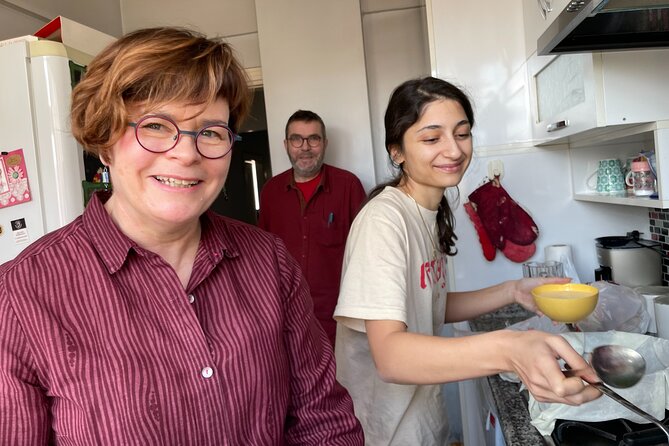
This is a Turkish breakfast cooking class, but the real value is access. You are not just eating in a restaurant setting, you are learning in a real home kitchen in Sarıyer, Istanbul, starting at 10:00 am and ending back at the meeting point. The address is: Huzur, Oyak Sitesi No:21, 34475 Sarıyer/İstanbul, Türkiye.
For $65 per person and about 2 hours 30 minutes, it is priced like a focused culinary experience rather than a budget meal. And with a maximum group size of 6 travelers, you are getting the kind of attention that helps you actually reproduce the food later, not just take photos and leave.
The class is offered in English, and you get a mobile ticket. Service animals are allowed, and the meeting area is near public transportation, which matters in Istanbul where taxis can turn into an unpredictable plan.
Other Istanbul outings to compare
- Istanbul: Bosphorus Dinner Cruise & Show with Private Table
★ 4.8 · 62,058 reviews - Istanbul: Daytime or Sunset Sightseeing Cruise & Audio Guide
★ 4.8 · 14,430 reviews - Istanbul: Bosphorus Dinner Cruise & Turkish Night Show
★ 4.8 · 12,954 reviews
The Turkish Breakfast Menu, Explained Simply
Turkish breakfast is special because it is built like a full spread. You get hot dishes and cold favorites together, so the meal changes with every bite. In this class, you will taste that rhythm and learn how to cook the hot elements.
Here is what you can expect, in the flow of a typical Turkish breakfast style:
- Starter: Simit
Simit is that sesame-crusted ring you see everywhere. It is crunchy, lightly chewy, and made for dipping into something creamy or eating alongside eggs and cheese.
- Main: Menemen
This is a classic egg-and-vegetable breakfast, cooked until it becomes thick and savory, not watery. It is one of those dishes that makes you understand why Turkish mornings include hot food.
- Main: Muhlama (Kuymak)
Think corn meal and cheese cooked together until it turns silky and comforting. It is rich, but in a homey way, like something meant to warm you up from the inside.
- Main: Eggs with Sucuk
Sucuk is the Turkish-style pepperoni sausage with lots of spice and garlic. When you cook it with eggs, you get a breakfast that is bold, salty, and deeply satisfying.
- Variety of cheese
Cheese is not a side note in Turkey, it is part of the plate. You will learn how cheese works with the hot dishes, sauces, and breads.
- Kaymak with honey
Kaymak is a creamy Turkish dairy topping. Paired with honey, it is sweet, smooth, and almost dessert-like, even though it belongs at breakfast.
What this menu teaches you is practical. Most people can make eggs, but this class shows you how to build a breakfast spread so it feels Turkish, not just “breakfast food.”
Simit at the Start: Getting Your Bearings for the Meal
You start with simit, and it sets the tone fast. The sesame crust gives you texture right away, and the bread form helps you understand Turkish breakfast as an eat-anything spread, not one single dish.
If you are used to grab-and-go breakfasts, simit is a good reality check. It is meant to be part of a longer meal where people snack, chat, and keep adding bites from the table.
This opening also helps you settle in. Before you start cooking anything, you get a first taste and time to ask questions, ask about ingredients, and get comfortable with the kitchen.
Menemen: The Egg-and-Vegetable Technique You Will Actually Use
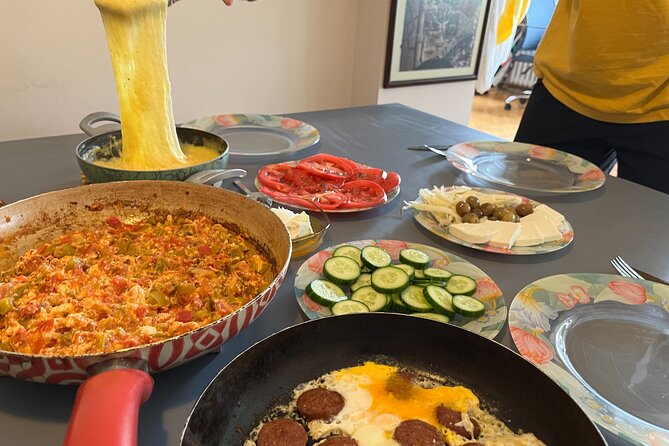
Menemen is often the dish that surprises people. It looks simple, but it rewards attention to cooking style. The version you will learn here is the traditional breakfast approach: eggs cooked with vegetables until the mixture turns thick, glossy, and flavorful.
What you will take home from this part is more than a recipe name. You will learn how menemen should feel when it is done, because in a good menemen, the eggs should be set but still tender, and the vegetables should taste cooked through, not raw.
Why it matters: menemen is versatile. Once you understand the basic method, you can adapt it with what you find at home markets. Even if you do not recreate every ingredient, you will understand the logic of Turkish breakfast cooking: build flavor first, then bring eggs in at the right moment.
Same part of the country, a different kind of day:
- Best of Istanbul 1, 2 or 3-Day Private Guided Istanbul Tour
★ 5.0 · 8,922 reviews - Istanbul: Basilica Cistern Fast-Track Entry and Audio Guide
★ 4.6 · 7,521 reviews - Istanbul: Hagia Sophia Skip-the-Line Ticket & Museum Option
★ 3.7 · 4,958 reviews - Istanbul: Hodjapasha Whirling Dervishes Show & Exhibition
★ 4.4 · 4,790 reviews
Muhlama (Kuymak): Comfort Food That Teaches Patience
Then comes muhlama (kuymak), one of those dishes that makes people slow down. Corn meal and cheese are cooked together until the texture becomes creamy and cohesive, not crumbly.
This is the part where cooking time and heat control matter. If the heat is too low, it drags. Too high, and it can get uneven. You learn how the cheese behaves as it melts into the corn meal, turning the whole thing into a warm, cohesive bowl.
Why this class step is valuable: many home cooks chase shortcuts. Muhlama teaches you that breakfast can be slow and still practical. Once you learn the texture cues, you can recreate it in your own kitchen with confidence, not guesswork.
Eggs with Sucuk and the Art of a Bold Breakfast Plate
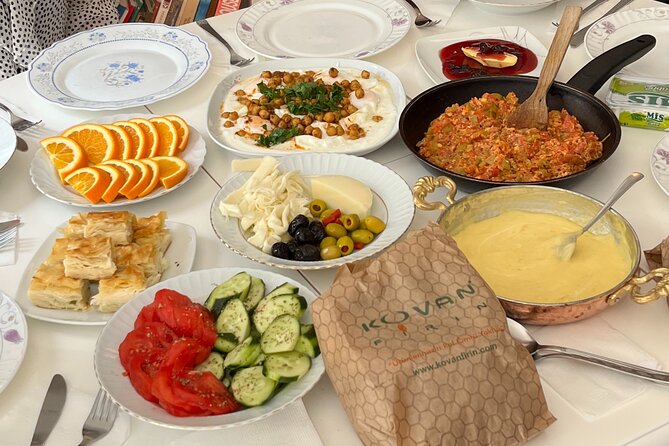
Next is eggs with sucuk, a straightforward combo with big flavor. Sucuk brings spice, garlic, and a salty punch. Cooked into eggs, it flavors the whole dish instead of just topping it.
This is one of the most satisfying lessons because it shows you how Turkish breakfast handles seasoning. You do not need a pile of fancy sauces. You need the right sausage, heat control, and eggs cooked to your preferred tenderness.
Alongside this, you will also be working with a variety of cheese. The real learning is how to put it together on your plate. In Turkey, cheese often acts like an anchor. It balances salt from sucuk, softens the richness of muhlama, and gives you a cool bite between hot mouthfuls.
Kaymak and Honey: Finish Like a Turkish Morning
If you only think of breakfast as savory, kaymak with honey changes the picture. Kaymak is creamy and rich, and honey adds sweetness that turns breakfast into a gentle dessert-like finish.
This final taste matters for two reasons. First, it helps you understand Turkish breakfast as a meal built for balance, not strict categories. Second, it gives you a flavor memory that is hard to forget. Even if you recreate only part of the menu at home, this pairing is the one that often makes people say it tasted truly Turkish.
The Small-Group Advantage: More Cooking, More Conversation
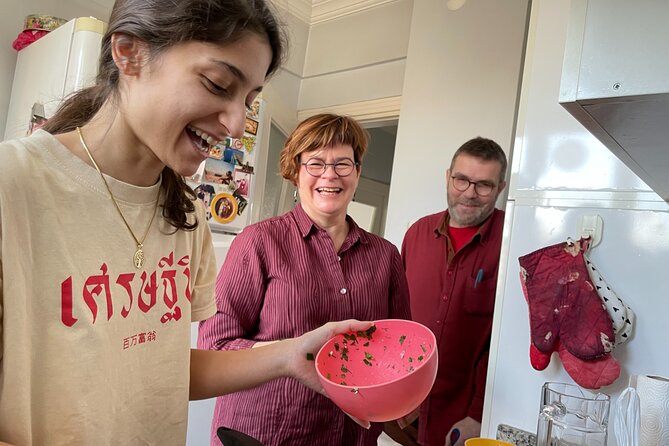
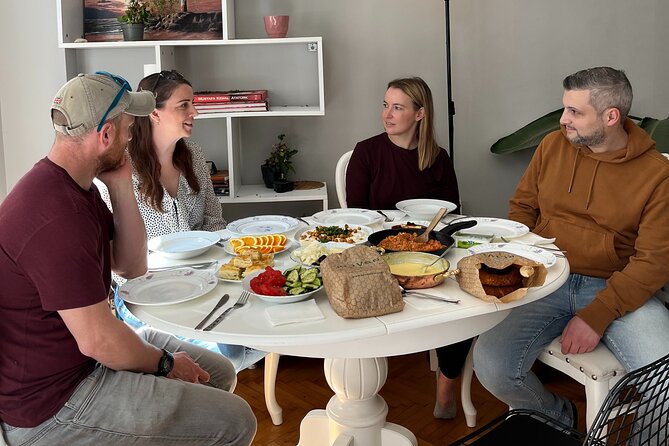
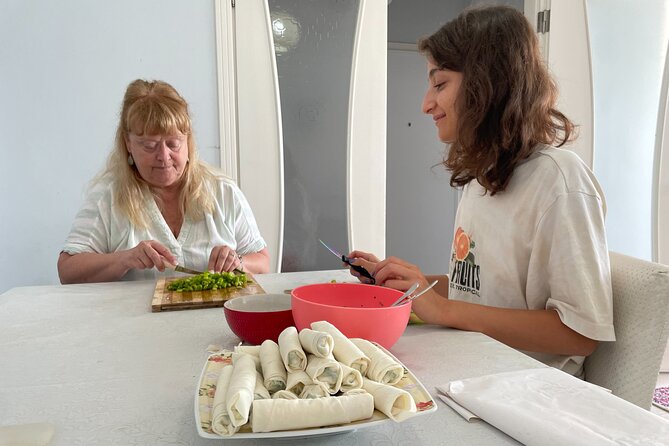
With a maximum group size of 6 travelers, the dynamic stays personal. You are not competing for attention, and you can ask questions without feeling rushed.
That matters because the hosts are doing more than teaching steps. They want you to understand the breakfast as part of everyday life. One thing that stands out is how genuine the conversations can be, including friendly talk with both locals and visiting people.
Also, this is not a sterile “follow along” class. The vibe can be warm and homey, and you might even get a charming extra moment like meeting their cat Petra. It sounds small, but those everyday details are often what make a home experience feel real.
Where This Happens, and How the Timing Feels
The experience runs about 2 hours 30 minutes and starts at 10:00 am. You meet at Huzur, Oyak Sitesi No:21 in Sarıyer, and it ends back there.
That timing is smart if you are already in the European side of Istanbul for the morning, because you get a real meal before lunch crowds and before the day gets too hectic. It also gives you a chance to carry what you learn into the rest of your trip. After you cook menemen and muhlama, you start recognizing similar dishes when you eat out.
Drawback to consider: because it is at a home location and not a big restaurant venue, you should arrive on time. Late arrivals can throw off the flow of cooking, and you want enough room in your schedule to enjoy the food, not just get through it.
Value Check: Does $65 Buy Real Usefulness?
At $65 per person, you are paying for three things: instruction, a full breakfast spread, and a home-style cultural connection. This is not just a tasting, because you will learn how to prepare multiple components.
You also get something intangible but practical: explanations that help you understand why dishes are made the way they are. That makes the difference between reading a recipe later and cooking something that actually resembles what you ate.
In other words, this price can feel fair when you think of it as a meal plus a cooking education in a small group. If you love Turkish food already, it is a strong use of money. If you are brand new to Turkish breakfast, it is still a good deal because the menu covers the core hits in one go.
Practical Tips Before You Go
A few things will make this class easier and more enjoyable:
- Come with an appetite. This is a full breakfast format, not a light snack.
- Have curiosity ready. The English-speaking setup is designed for you to ask questions while cooking.
- If you have dietary needs, you might want to confirm ahead of time. The menu centers on eggs, cheese, sausage, and dairy like kaymak, so you will want to plan.
- If you care about transport, take advantage of the fact that the meeting area is near public transportation. Istanbul traffic can be unpredictable.
And if you are the kind of traveler who likes food memories you can recreate later, this is exactly that kind of experience. You leave with recipes to try at home, plus the cooking knowledge that makes those recipes feel doable.
Should You Book This Turkish Antioch Breakfast Class?
Book it if you want a Turkish breakfast that feels lived-in, not performed. You will like it if you care about home-style hospitality, small group attention, and learning the classics like menemen, muhlama (kuymak), and sucuk eggs.
Skip it if you want a big touring day filled with landmarks and photo stops. This is a focused food experience, and it works best when you schedule it as your morning highlight.
My take: this is one of the more valuable ways to understand Turkish breakfast. The combination of a real home setting, a tight group size, and a menu that teaches technique makes it a practical souvenir, not just a memory.
FAQ
How long is the Turkish Antioch breakfast experience?
It lasts about 2 hours 30 minutes.
How much does it cost?
The price is $65.00 per person.
What language is the class offered in?
The experience is offered in English.
How many people are in each group?
The maximum group size is 6 travelers.
Where do I meet and when does it start?
You start at Huzur, Oyak Sitesi No:21, 34475 Sarıyer/İstanbul, Türkiye at 10:00 am. It ends back at the meeting point.
Is free cancellation available?
Yes. You can cancel up to 24 hours in advance for a full refund.
Newest Istanbul reviews on the site
- istanbul airport transfer★ 3.5 · 43 reviews
- Cappadocia best one day tour Including flight tickets★ 5.0 · 17 reviews
- Food Tour in Istanbul with Local Guide★ 5.0 · 37 reviews
- Istanbul Private Guiding Service★ 5.0 · 68 reviews
- Best Istanbul tour with private guide by skipping ticket line★ 5.0 · 103 reviews
- Istanbul Private Tour (Licensed Guide)★ 5.0 · 17 reviews
- Istanbul Airport (IST) To Hotels Transfer★ 5.0 · 80 reviews
- Best Of İstanbul Europe Side In One Day★ 5.0 · 10 reviews
Istanbul Tours, compared.

Bosphorus Dinner Cruise & Show with Private Table
Read our review →
Daytime or Sunset Sightseeing Cruise & Audio Guide
Read our review →
Bosphorus Dinner Cruise & Turkish Night Show
Read our review →
Best of Istanbul 1, 2 or 3-Day Private Guided Istanbul Tour
Read our review →
Basilica Cistern Fast-Track Entry and Audio Guide
Read our review →
Hagia Sophia Skip-the-Line Ticket & Museum Option
Read our review →
Hodjapasha Whirling Dervishes Show & Exhibition
Read our review →