
REVIEW · 4-DAY EXPERIENCES
4-Day Private Pilgrimage Tour to the 7 Churches of Asia Minor
Revelation comes alive in Turkey. This private 4-day pilgrimage strings together the 7 Churches of Asia Minor with hands-on site visits, Roman ruins, and guided Bible reading in context, from Smyrna to Ephesus.
I especially like how the day plan balances big-ticket ancient cities with quieter moments, like St. Polycarp’s story at the Agora Open Air Museum and the calm, reflective stop at Meryemana (the Virgin Mary’s House). I also like the practical setup, including pickup options, air-conditioned driving, and entrance fees for most major sites, so you can focus on the experience instead of tickets.
One consideration: this is a lot of walking and standing, and some add-ons are not included (Terrace Houses in Ephesus and optional swimming at Cleopatra Pools), so budget a little extra and pack smart shoes.
In This Review
- Key things to know before you go
- The smart reason this route fits Revelation in 4 days
- Day 1 in Bergama: Smyrna’s suffering, Pergamon’s pressure, and St. John nearby
- Day 2: Thyatira and Sardis warnings, Philadelphia’s open door, then Pamukkale’s thermal reset
- Day 3: Hierapolis and Laodicea, plus the optional luxury of Cleopatra Pools
- Day 4 in Ephesus: the Loveless Church, Terrace Houses, Meryemana, and St. John’s tomb
- Price and value: what $1,276.36 buys you, and where you should plan extra
- What the best guides do here, and why it matters to you
- Who this tour suits best, and who might want a different style
- Should you book the 7 Churches of Asia Minor tour?
- FAQ
- Are airport or hotel pickups included?
- Is this tour private?
- What meals are included?
- Are entrance fees included?
- Is swimming at Cleopatra Pools included?
- What if weather is bad?
Key things to know before you go
- Revelation read on location at the church sites, tied to what you can actually see in the ruins
- Private pacing with only your group, so you can move at a human speed instead of sprinting between stops
- Two thermal detours that feel like a reset, Pamukkale terraces and (optional) Cleopatra Pools swim
- Entrance fees handled for most stops, with a couple of well-marked extras paid on-site
- Reliable guide and driver teamwork, with religious history focus and day-to-day care (cold water is a nice touch)
The smart reason this route fits Revelation in 4 days
The 7 Churches of Asia Minor story is not only a list of names. It is a map of real places where early Christians lived, worked, worshipped, and took risks. What makes this tour appealing is that it follows the geography in a way that helps you remember it. You start in Smyrna, move north and inland to places like Pergamon, Sardis, and Laodicea, then finish at Ephesus on the coast.
I like that the itinerary uses the ancient city layout as the lesson plan. You are not just hearing verse explanations in a van. You’re seeing what trade, empire pressure, wealth, and daily routines looked like. That is especially useful for Ephesus, Sardis, and Laodicea, where the physical setting explains the metaphors in Revelation so much faster than a classroom ever will.
There is also a practical rhythm here. The heavy history days are paired with realistic travel time and hotel nights in Bergama, Pamukkale, and Kusadasi. You get time for dinner and to explore the nearby towns at a relaxed pace, rather than being stuck in long “get back on the bus” cycles all day.
Other Izmir outings to compare
- Ephesus Tour From Izmir
★ 5.0 · 980 reviews - Pamukkale Tour from Izmir
★ 5.0 · 806 reviews - Cappadocia: Pottery Workshop
★ 4.8 · 493 reviews
Day 1 in Bergama: Smyrna’s suffering, Pergamon’s pressure, and St. John nearby
Day 1 begins at the Agora Open Air Museum, the heart of ancient Smyrna. After pickup from Izmir Airport or a hotel around Kusadasi, Izmir, or Selcuk, you walk through the Roman civic center and hear the Smyrna thread of Revelation (Rev. 2:8-11). The highlight is St. Polycarp of Smyrna, the bishop tied to the city who refused to renounce Christ and was martyred there.
One useful detail: the modern Polycarp Church is under restoration, so the focus shifts to the Agora, the actual place linked to Roman judgment. That turns a potential disappointment into something stronger. Instead of only seeing a church building, you are grounding the story in the city space where the pressure happened.
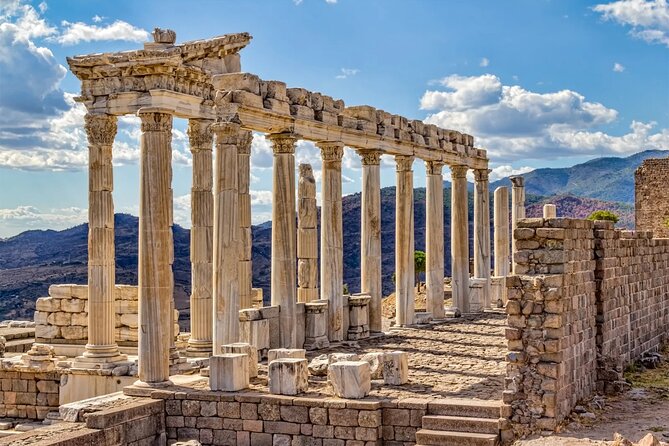
Next comes Pergamon Ancient City and the Acropolis, linked to Revelation’s warning about where Satan has his throne (Rev. 2:12-17). The tour points your attention to imperial symbolism, like the Temple of Trajan area and the Altar of Zeus foundations, which helps you understand how early believers were pressured by the Imperial Cult. Even if you’re not deep into archaeology, you can read the stones: this is power built into architecture.
You also get a major visual contrast in Pergamon. The steep theater and prominent elevated structures show how the empire performed itself. That matters because Revelation is written from the perspective of people under real systems, not abstract ideas.
From there, you step into the Asklepion, often described as the world’s first major psychiatric hospital dedicated to Asclepius, the healing serpent. This stop is fascinating because it compares two ways people sought healing around the same era. You see what pagan healing looked like in practice, including incubation and sacred water traditions, and then the guide frames how the early Christians understood miracles differently. It’s a change of pace that makes the spiritual atmosphere feel real.
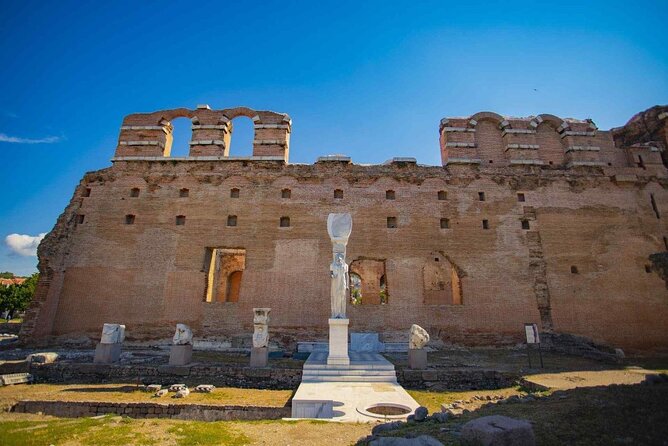
The day closes with the Red Basilica (Kizil Avlu), tied to St. John and included among the Seven Churches of Revelation. This huge structure is a strong symbol because it shows religious reuse in physical form. It started as a temple for Egyptian gods (Serapis) and later became a basilica for Christians. For your eyes, that transformation is striking, and for your mind, it gives you a theme for the whole tour: the faith keeps spreading and reshaping the world it finds.
You then drive to Bergama town center for overnight in Bergama. Day 1 can feel dense, but the route keeps it moving without turning it into a blur.
Day 2: Thyatira and Sardis warnings, Philadelphia’s open door, then Pamukkale’s thermal reset
Day 2 starts with Akhisar (Thyatira), where Revelation’s counsel covers love, service, and tolerance of moral compromise (Rev. 2:18-29). In the ruins of a basilica in the modern city center, you get a sense of how trade and local power dynamics could squeeze faith communities. The guide also connects the moment to Christ’s description of eyes like blazing fire, which helps you understand that the warning is not only about doctrine. It is about daily life, ethics, and what people are willing to put up with.
Then you move to Sardis (Sardes), called the Dead Church (Rev. 3:1-6). You see the grand ruins you would expect from a wealthy capital, including the gymnasium and synagogue. That’s precisely the point of the message. Jesus points to the spiritual reality behind the impressive appearance. Standing on the old marble roads, you get time to reflect on the idea of waking up, and the warning about not soiling clothes.
Sardis is one of the most memorable stops if you like your Bible tied to real settings, because it forces you to compare two different kinds of life. There’s the showy side, and there’s the true side.
After Sardis, the day ends with Philadelphia (Alasehir), known as the faithful church (Rev. 3:7-13). The guide frames this stop around the open door that no one can shut and the image of being a pillar in the temple of God. The tone is noticeably different from Thyatira and Sardis, and that matters because it gives you breathing room mentally.
A practical plus here: the itinerary includes scenic drives through Turkish countryside and vineyards between sites. It’s not just scenery for scenery’s sake. It gives your brain time to switch gears, so by the time you arrive at the next ancient site, you are ready to connect what you just learned.
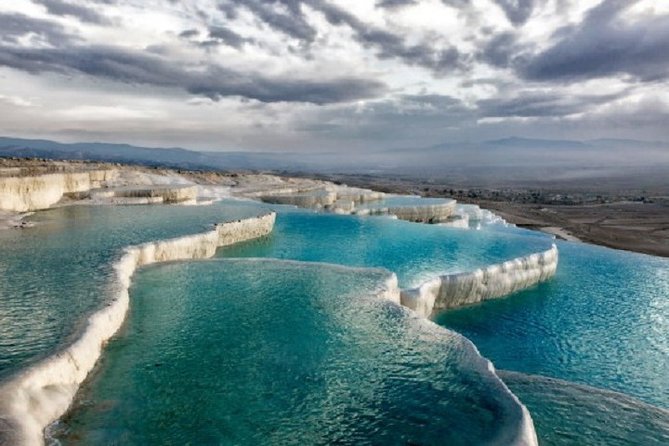
Then you head to Pamukkale, where dinner and an overnight in a 5-star hotel are included. Pamukkale is a strong mid-tour “reset” because you go from harsh Roman-era realities into something gentler and almost surreal. Even if you’re not religious, the mineral terraces do a great job loosening tight schedules.
Day 3: Hierapolis and Laodicea, plus the optional luxury of Cleopatra Pools
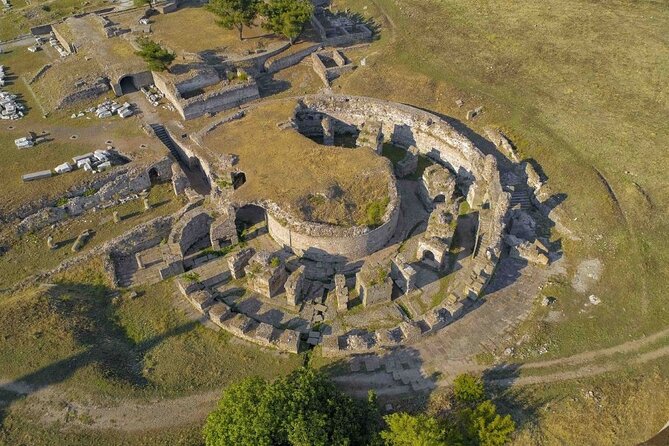
Day 3 starts in Hierapolis, described as the Holy City, and the focus for pilgrims is the Martyrium of St. Philip. This is the stop where the tour becomes emotionally grounded. You visit Philip’s octagonal tomb and then stand in the massive ancient theater overlooking the valley. For me, the scale is key. When you see that the place was built for public visibility, you understand why martyrdom was both punishment and spectacle.
You also walk through one of Anatolia’s largest necropolises, which can feel heavy in a good way. The contrast is direct: thousands of pagan tombs around you, and then Christian hope framed in the story of resurrection.
Next is the Hierapolis Archaeology Museum, housed inside the ancient Roman Baths. It’s a shorter stop but a smart one. Art and sarcophagi help you picture what wealth and cultural life looked like for the society surrounding early Christians. It’s a quick way to add texture, not just dates and names.
Then you get an optional stop at Cleopatra Pools. Here you can swim among submerged Roman columns in warm thermal water. The swimming entrance fee is extra and paid on-site. If you do not want to swim, the pool area cafeteria gives you an easy fallback.
If you do plan to swim, go in with realistic expectations. This is optional relaxation during a pilgrimage day, not a spa in a bottle. Bring what you need and treat it like a fun break that keeps your energy up for the afternoon.
After that comes Pamukkale Thermal Pools, the famous Cotton Castle. You get free time to walk barefoot on the white travertine terraces formed by mineral waters. This is where I think most people take the most photos, but it is also where you can do real mental quiet. The view across the plains helps you slow down. And because it is a thermal place that has drawn seekers for centuries, it adds a continuity feeling across time.
Finally, you visit Laodicea (Rev. 3:14-22), the Lukewarm Church. What makes this stop work is the physical explanation of the metaphor. You see the ancient water distribution system, where hot water came from Hierapolis and cold water from Colossae, and the city received it lukewarm. That is the kind of Bible imagery you can actually visualize.
The tour also includes the newly excavated Church of Laodicea and Syria Street, which helps you understand why the city was wealthy while spiritually poor, blind, and naked. It’s not meant to shame you. It is meant to make the words concrete.
You then drive to Kusadasi for an overnight at a 4-star hotel.
Same part of the country, a different kind of day:
- Ephesus Tour with Virgin Mary From Izmir All Inclusive
★ 5.0 · 478 reviews - Ephesus Tour with Temple of Artemis and Sirince Village From Izmir
★ 5.0 · 239 reviews - Ephesus and St. Mary’s House Day Trip from Izmir with Lunch
★ 4.5 · 210 reviews - From Izmir: Full Day Boat Trip around Cesme with BBQ Lunch
★ 4.5 · 208 reviews
Day 4 in Ephesus: the Loveless Church, Terrace Houses, Meryemana, and St. John’s tomb
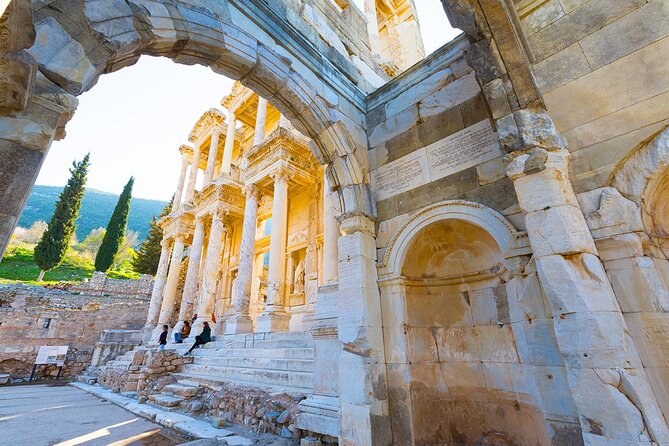
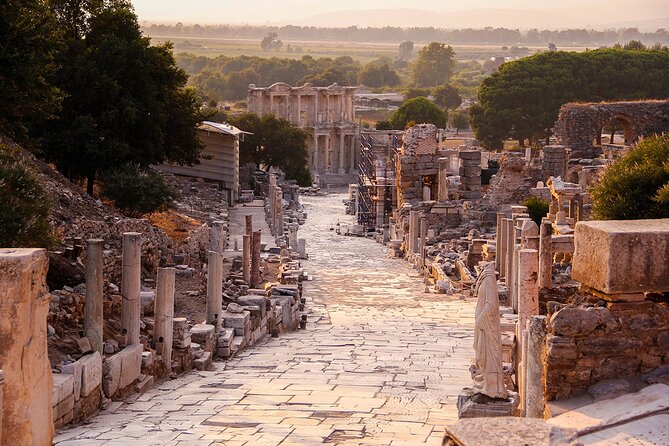
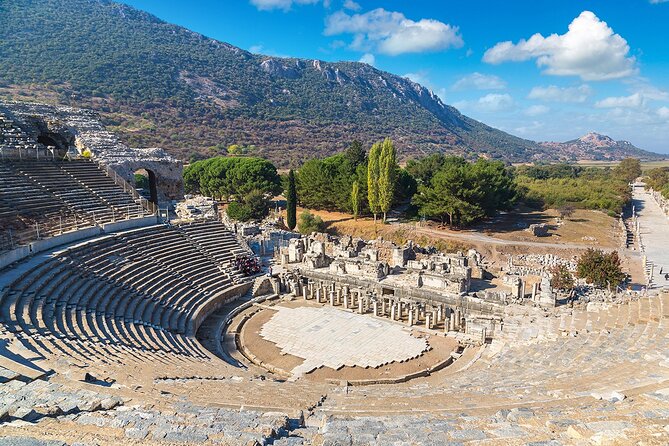
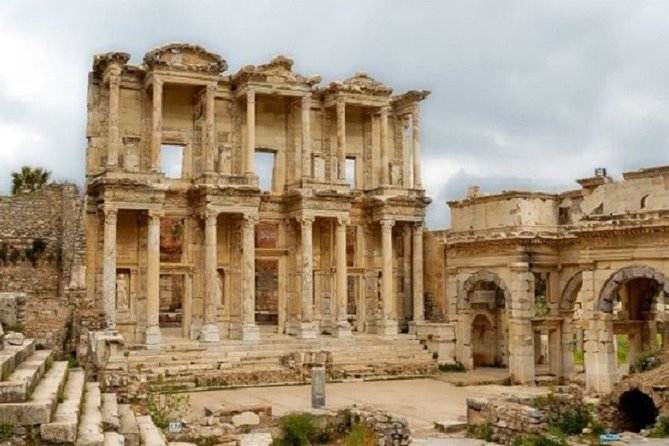
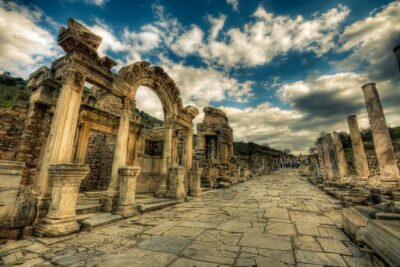
Day 4 is where the tour culminates: Ancient City of Ephesus and the Loveless Church (Rev. 2:1-7). You walk along Curetes Street, then see the Great Theatre, famous for the Acts 19 riot, and admire the Celsus Library.
This is where a good guide earns their keep. The biblical message is not only read, it is tied to how Ephesus functioned as a major city. When you stand in the theater area and see how crowds gathered, the danger and public pressure of early Christian life stops feeling theoretical.
After Ephesus, there is a highly recommended optional add-on: Ephesus Terrace Houses. These are roofed excavations showing Roman villas and the private life of the wealthy, including mosaics, frescoes, and private baths. The key detail is that it requires a separate entrance ticket paid on-site. If you like seeing daily life rather than just temples and public buildings, this is worth the extra time and cost.
Then the tour moves to Meryemana (the Virgin Mary’s House) on Mt. Koressos. This is one of the most peaceful stops on the whole route. You have time to visit the humble stone house and chapel, light a candle for loved ones, and collect water from the Holy Fountains. The tour frames the site through tradition connected to St. John bringing Mary after the crucifixion (John 19:26-27).
If you’re traveling with a mixed group of faith levels, this stop can be the one that feels most universal. It’s quieter, reflective, and easy to enjoy without needing specialized background.
Next comes the Temple of Artemis, one of the Seven Wonders of the Ancient World. Today only a single column remains standing, which actually helps the site feel honest rather than overproduced. The guide also connects Artemis to the anti-Paul riot that you can connect back to the Ephesus setting and the social pressures of the era.
The tour concludes at the Basilica of St. John, built by Emperor Justinian. You visit St. John’s burial place on Ayasuluk Hill. After the walking, the ruins, and the Bible connections, the tomb area feels like a natural closing paragraph for your mind. The view over the ancient city adds a fitting stillness.
After final visits in Ephesus, you get a private transfer either to Izmir Adnan Menderes Airport (ADB) or your hotel in Izmir. The drive is about 45 to 60 minutes, with time to relax in the vehicle and absorb the last stretch of the journey.
Price and value: what $1,276.36 buys you, and where you should plan extra
At $1,276.36 per person for a 4-day private tour, the value depends on what you care about most.
Here’s what stands out as good value based on what’s included:
- Professional religious history guide and air-conditioned driving in modern vehicles
- Entrance fees to the Biblical sites you visit, which matters because these add up quickly
- Accommodation in local hotels: Bergama, Pamukkale (5-star), and Kusadasi
- Breakfasts and one dinner: breakfast is included for 3 mornings, and dinner is included for Day 2
- Pickup and drop-off between your hotel or airport, so you do not waste time coordinating transfers
Where you should expect extra costs:
- Ephesus Terrace Houses entrance fee is not included
- Cleopatra Pools swimming entrance fee is not included (swimming is optional)
My advice: if you want maximum meaning per hour, budget for Terrace Houses. It complements the more public sites by showing private life. For Cleopatra Pools, decide based on your energy level. It can be a fun thermal break, but the tour does not depend on it.
Also, think about the hotel locations and nights. This is not a day trip. You are paying for time and logistics done for you. That becomes valuable when you want your guide to handle the route, ticket priorities, and on-the-ground timing.
What the best guides do here, and why it matters to you
The difference between a good tour and a great tour in this kind of itinerary is not just facts. It is pacing, translation of meaning, and how you connect verse to place.
In particular, guides like Gufte are known for being patient, kind, and detailed, with a style that can answer historical questions without rushing you. One signature touch is reading each Revelation letter at the exact church location. That turns a verse into a moment you can physically stand inside.
The driving side matters too. Drivers like Ogun are professional and attentive, including practical care like cold water bottles. On a route with long site days and warm weather, small comforts can keep your energy up and your mood steady.
Finally, I like that the tour includes time for authentic side stops that do not feel like a hard sell. On some days, you may be taken to local shops for items like rugs, parchment paper, or onyx. The goal is usually to add context, not pressure you into buying.
Who this tour suits best, and who might want a different style
This works best if you:
- want a faith-focused, Bible-tied tour with history and place
- prefer a private group and manageable pacing
- like learning from a specialized guide who can connect the setting to Revelation themes
- are comfortable with a moderate amount of walking and standing
You might consider a different style if you:
- want a light day with minimal walking
- hate optional add-ons and prefer everything fully included
- are traveling with a tight mobility limitation, since ancient sites and uneven terrain are part of the package
Should you book the 7 Churches of Asia Minor tour?
Book it if you want to experience Revelation in the places where the story first took root in lived geography. This route gives you strong “A to B to C” understanding, with Smyrna, Pergamon, Thyatira, Sardis, Philadelphia, Laodicea, and Ephesus connected in a way that makes the metaphors easier to remember.
Skip it, or adjust your expectations, if you want a relaxed sightseeing loop with no spiritual framing. This tour is clearly built around churches of Revelation and pilgrimage meaning, with guided readings at the sites.
If you book, my biggest tips are simple: wear good shoes, plan for extra fees at Terrace Houses if you enjoy Roman domestic life, and treat Pamukkale as your mid-trip recharge. Do those, and you will get a smoother, more memorable journey.
FAQ
Are airport or hotel pickups included?
Yes. Pickup details are arranged from hotels or airports in Istanbul or Izmir. You should confirm the exact pick up point and time with the provider.
Is this tour private?
Yes. It is private, and only your group participates.
What meals are included?
Breakfast is included for 3 days. Dinner is included on Day 2. Other meals are not included, and your guide recommends places to eat.
Are entrance fees included?
Entrance fees are included for the Biblical sites visited on the tour. Some specific extras are not included, such as the Terrace Houses in Ephesus and swimming entrance at Cleopatra Pools.
Is swimming at Cleopatra Pools included?
No. Swimming is optional, and it requires an extra entrance fee paid on-site. If you prefer not to swim, you can still enjoy the pool area.
What if weather is bad?
This experience requires good weather. If it is canceled due to poor weather, you will be offered a different date or a full refund.
Newest Izmir reviews on the site
- Vip Airport Transfer★ 4.5 · 12 reviews
- Small Group Fairy Tale Pamukkale Tour From Izmir★ 4.5 · 10 reviews
- Wine Tasting Tour at Two Wineries in Urla Turkey★ 5.0 · 13 reviews
- Private Express Ephesus Tour from Izmir Port / Cruisers only★ 5.0 · 18 reviews
- Seven Churches of Revelation Tour ( Private)★ 5.0 · 61 reviews
- From Izmir: PRIVATE Best of Ephesus Tour (Skip-the-Line)★ 5.0 · 21 reviews
- SKIP THE LINE / Highlights of Ephesus Private Tour / FOR CRUISE GUESTS ONLY★ 5.0 · 141 reviews
- Private Ephesus and Virgin Mary’s House tour★ 5.0 · 20 reviews
4-Day Experiences, compared.
Turkey Highlights 4 Day Tour from Istanbul Hassle-Free Package
Read our review →
Private 4 Days Turkey Tour from Istanbul to Cappadocia, Ephesus, Pamukkale
Read our review →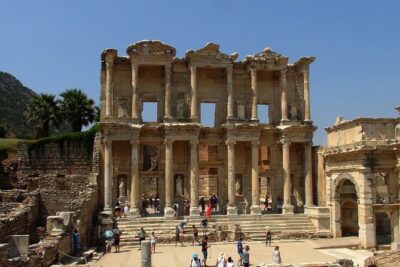
4 Day Turkey Tour : Cappadocia, Ephesus and Pamukkale
Read our review →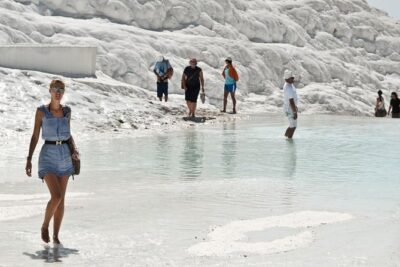
4 Day Turkey Tour: Cappadocia, Ephesus, Pamukkale by Plane
Read our review →
4 Days – Ephesus and Cappadocia Tours Flights & Accommodations Included
Read our review →
4 Days Turkey Tour: Cappadocia, Pamukkale, Ephesus
Read our review →
Jewels of Turkey – 4 Day Trip to Pamukkale Ephesus Cappadocia with Balloon Ride
Read our review →
4 Days Istanbul & Cappadocia with Cave Hotel + Optional Balloon
Read our review →Browse the lists this tour appears in